Alcantara Vineyards: the Verde River estate you can reach by kayak
Five of the twelve bookable wine tours in this region stop here, and one of them arrives by boat. Here is what the estate is actually like, and when it is worth driving yourself instead.
 By Patricia Collins, Sedona wine tour specialist & Verde Valley experience guide
Short answer
Alcantara Vineyards is an 87-acre estate at the Oak Creek and Verde River confluence near Camp Verde, roughly 35 minutes from Uptown Sedona. Its tasting room and restaurant open daily from 11am to 5pm with no reservation required, and five of the twelve bookable regional wine tours list it as a stop.
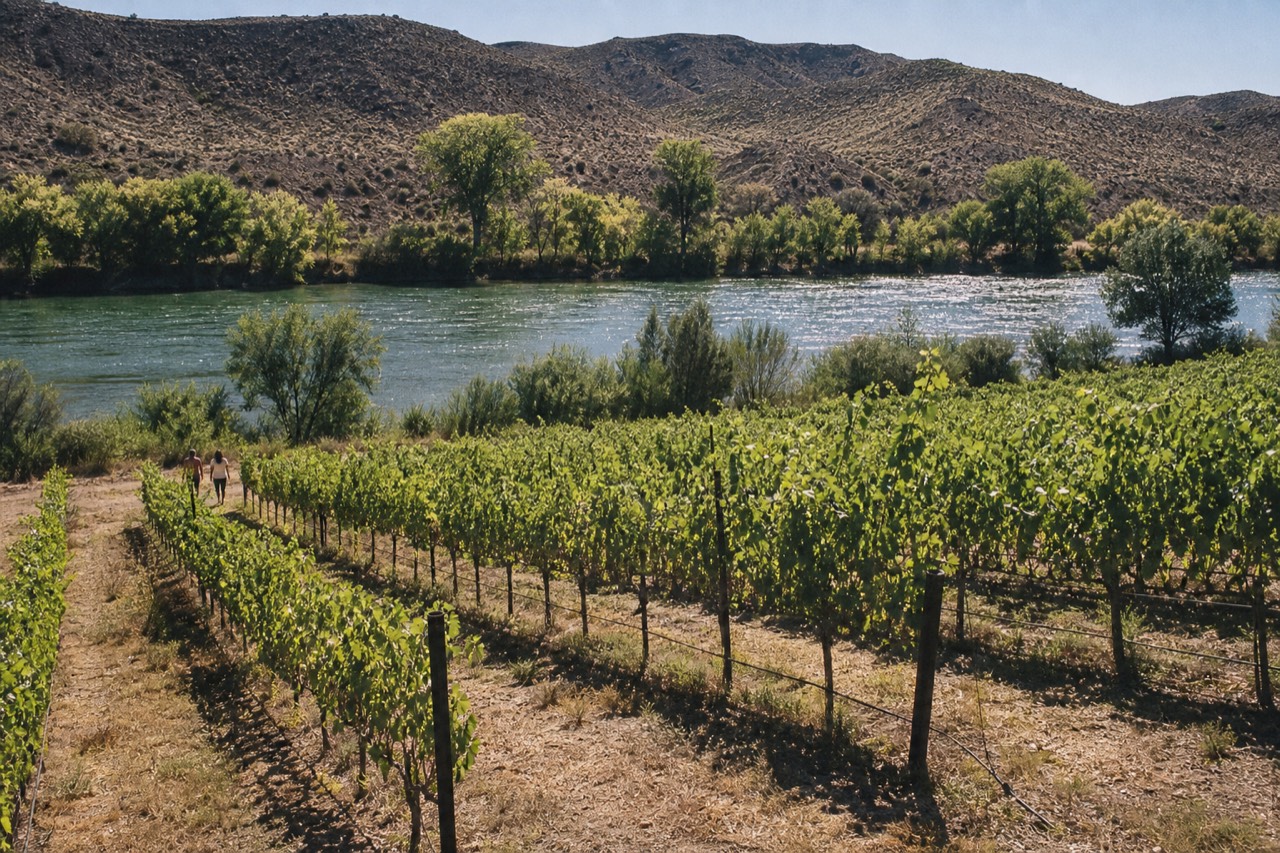
Two moving bodies of water meet at the bottom of this property, and the vines run downhill toward the meeting. That single geographic accident explains most of what follows. Coaches can park here. Horses can cross the river here. Kayaks can come ashore here. Very few wineries anywhere can claim all three, and no other winery in this valley can.
I have been putting wine days together in the Verde Valley since 2015, and the question I get about Alcantara has not changed much. Is it worth going out of the way for, or is it simply the stop that happens to fit the driving route? The honest answer is both, and which one it is depends entirely on how you arrive.
What is Alcantara Vineyards, and where does it actually sit?
Alcantara Vineyards is an 87-acre working estate near Camp Verde, planted on the terraces where Oak Creek runs into the Verde River. More than 20,000 vines cover the property across 17 varietals. The tasting room and its restaurant open daily from 11am to 5pm, and the estate has its own private river beach.
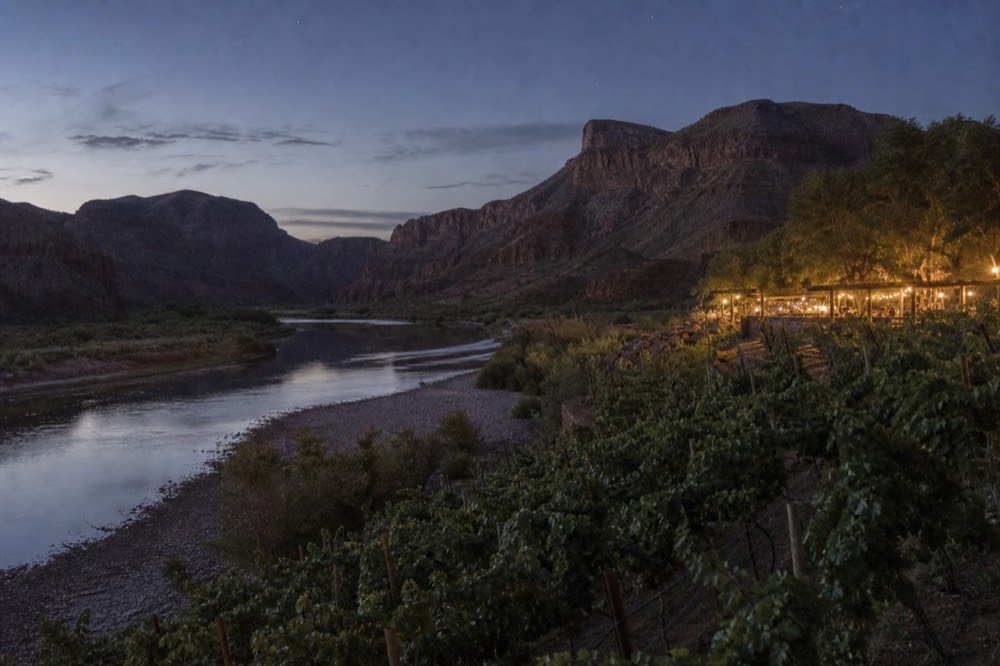
Start with the geography, because the geography is the product. Sedona itself sits high, dry and mostly vineless. The grapes grow 20 to 40 minutes southwest, in the Verde Valley AVA, which the federal Alcohol and Tobacco Tax and Trade Bureau established on November 9, 2021 as Arizona's third appellation and the 260th in the country. The whole AVA covers roughly 200 square miles and carries only about 125 planted acres spread across 24 vineyards, 11 wineries and 25 tasting rooms in Cottonwood, Cornville, Page Springs, Camp Verde, Clarkdale and Jerome.
Hold those two numbers next to each other for a second. The appellation as a whole has around 125 acres in the ground. Alcantara's property runs to 87 acres. Not all of that is vine, and nobody should pretend otherwise, but it tells you how much physical room a single estate of this size occupies in a very small wine region. This is not a converted garage with a bar in it. It is a piece of river bottom with a working farm on it.
The address is Camp Verde, which surprises people who assumed everything was in Cottonwood. Camp Verde puts the estate on the southern edge of the valley, closer to the interstate than to the tasting strip in Old Town, and about 35 minutes from Uptown Sedona if the highway behaves. That position is why it works as a first or last stop on a tour route rather than a middle one, and it is why the river trips start here instead of ending somewhere near town.
| Alcantara at a glance | |
|---|---|
| Where | Camp Verde, at the Oak Creek and Verde River confluence |
| Estate size | 87 acres |
| Vines | more than 20,000 |
| Varietals planted | 17 |
| Tasting room and restaurant | daily, 11am to 5pm |
| Annual closures | Thanksgiving and Christmas |
| Reservation for a tasting | not required |
| Drive from Uptown Sedona | about 35 minutes |
| On-site beyond the bar | private river beach, kayak landing, horseback tours crossing the Verde |
| Named as a stop on | 5 of the 12 bookable regional wine tours |
If you are still deciding which corner of the valley to spend your one free afternoon in, every winery and tasting room in the region is laid out by cluster, with the drive between each one.
Why do so many wine tours stop at Alcantara?
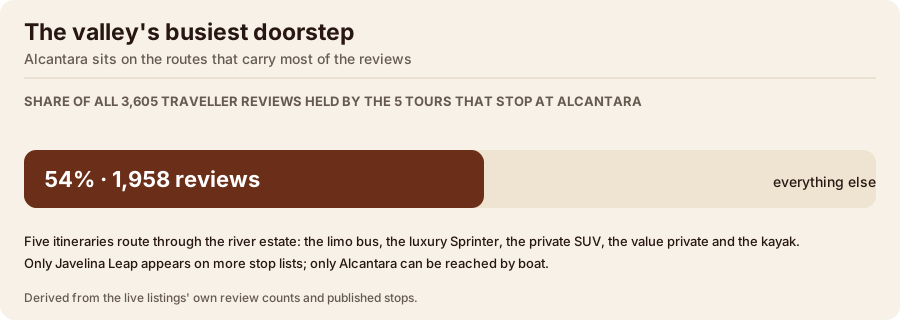
Five of the twelve bookable regional wine tours name Alcantara as a stop. Only Javelina Leap appears more often, at six. Alcantara earns its place on access rather than fame: it takes a coach-sized vehicle, it has ground for a picnic, and it is the one winery on the list a river trip can physically reach.
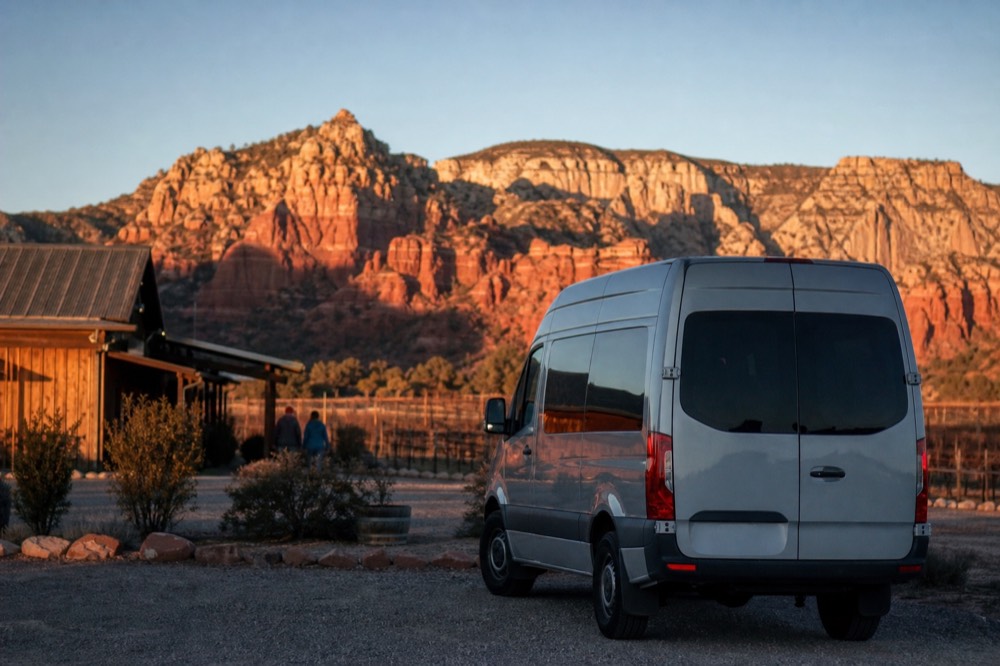
I counted this properly rather than repeating the marketing line, and the count is worth showing, because it is the kind of thing nobody publishes. Across the twelve tours we track, here is how often each named winery appears on an itinerary.
| Winery | Tours naming it | Which ones |
|---|---|---|
| Javelina Leap | 6 | limo bus, small-group lunch tour, all-inclusive shared, 3-hour express, luxury SUV private, vortex pairing |
| Alcantara | 5 | limo bus, small-group lunch tour, luxury SUV private, top-voted private, kayak trip |
| D.A. Ranch | 4 | small-group lunch tour, top-voted private, elite private, vortex pairing |
| Page Springs Cellars | 3 | all-inclusive shared, top-voted private, elite private |
| Oak Creek Vineyards | 3 | limo bus, luxury SUV private, elite private |
| Cove Mesa | 3 | limo bus, small-group lunch tour, luxury SUV private |
So Alcantara is not quite the most-visited winery in the valley. It is second, by one itinerary, and the site that tells you otherwise has not counted. What Alcantara does hold outright is reach: the five tours that stop here carry 1,958 of the 2,424 traveller reviews logged across all twelve. Roughly four in five reviews written about a wine tour in this region were written by somebody who stood on this property.
The practical reasons are unglamorous. A limo-style bus needs somewhere to turn around and somewhere for 20 people to eat a charcuterie board without queueing at one bar. The 87 acres absorb a group without feeling overrun, which is not true of every tasting room on the trail. And because the estate sits near the southern approach, a tour that starts with Sedona pickups can drop down here first and work back north through Cornville and Page Springs, which is a cleaner loop than the reverse.
There is a second-order effect worth understanding before you book anything. When one property appears on five of twelve itineraries, tours that look different on paper end up overlapping heavily on the ground. Book the limo-style bus one day and the small-group lunch tour the next and you will stand at the same bar twice, because both run Alcantara and both run Javelina Leap. If you are doing two wine days in the region, read the stop lists side by side first and pick the pair with the least repetition, which usually means one shared run plus something in the Page Springs and Cornville cluster rather than two valley-wide loops.
The small-group version handles this differently from the bus. It runs a Sprinter to four boutique wineries with a sit-down lunch rather than a picnic, sits at 4.7 across 663 reviews, and lists from $125 per person, and you can check the current price and available dates before you decide whether lunch at a table is worth the difference. For the full lineup of shared departures side by side, the shared vineyard runs sit on the homepage with ratings and from-prices attached.
What is the tasting room like, and do you need a reservation?
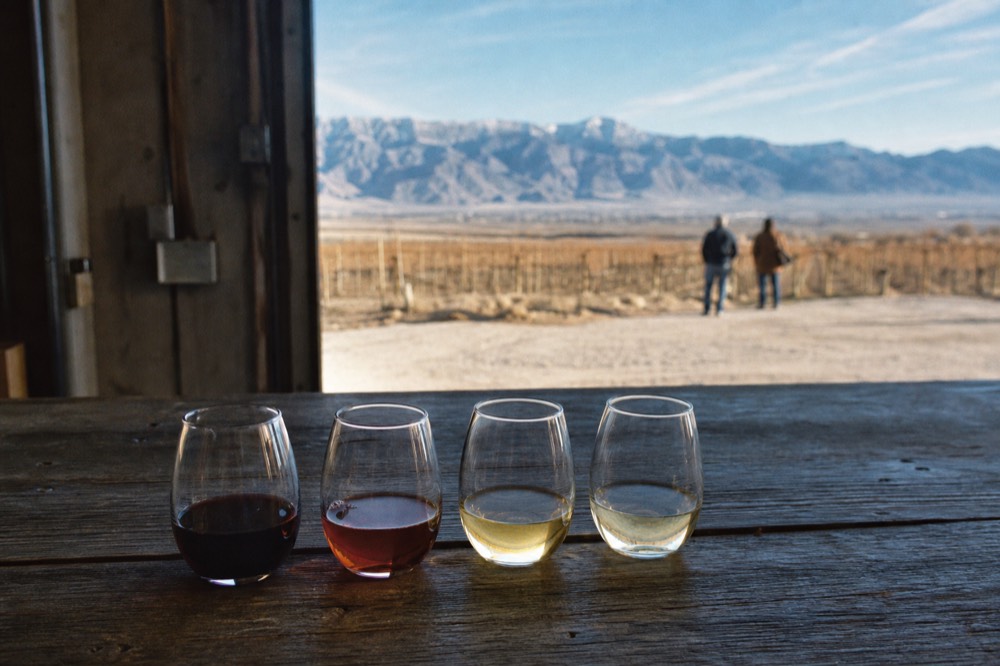
No reservation is needed for a tasting. The tasting room and its restaurant run daily from 11am to 5pm and close only for Thanksgiving and Christmas, so a weekday walk-in is a reasonable plan rather than a gamble. The room is styled Tuscan, though the terrace and the view do most of the real work.
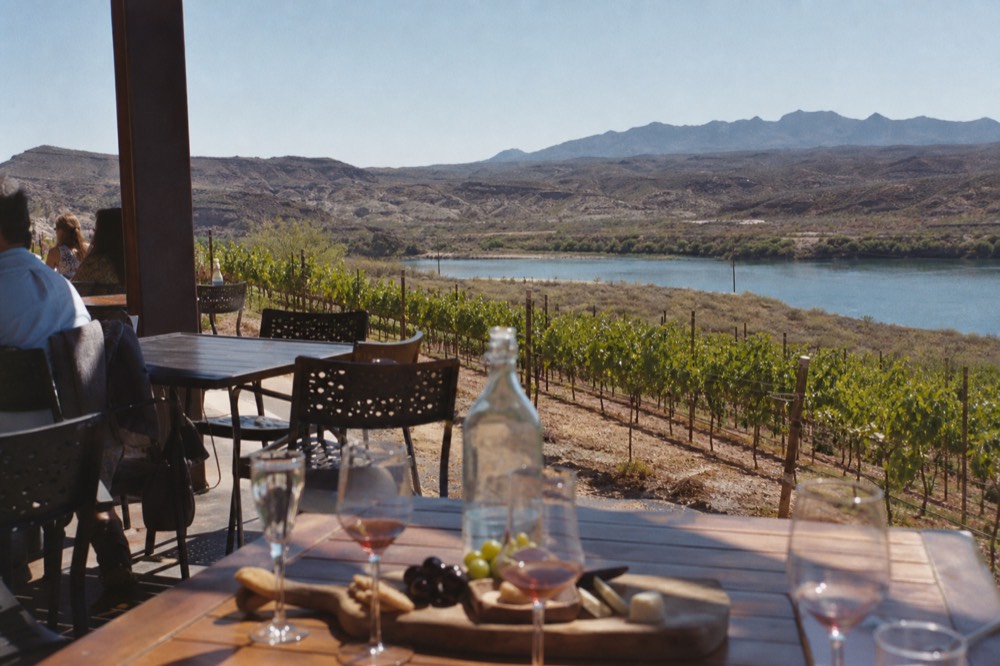
Those hours matter more than they look. Eleven to five is a five-hour window, which is short by the standards of a city wine bar and completely normal for a rural Arizona estate, and it means the whole day has to be planned backwards from a 5pm close. The current hours, along with the annual closures, sit on the estate's own site and are the thing worth checking the morning you go, since a private event can take a room out of circulation without warning.
Here is the piece of timing advice I give every guest. Midday is when the vans stack up. The 6 to 7 hour tours leave Sedona mid-morning, and the ones that run south first tend to land here in the middle of the day, which is exactly when the bar is busiest and the staff have the least time to talk to you. If you are driving yourself, arrive at 11 when the doors open, or come after 3:30 when the coaches have moved north toward Cornville. The difference in the experience is significant and it costs you nothing.
The restaurant on site changes the calculation for independent visitors. A tasting followed by food, on the same property, with the river below you, is a two-hour block rather than a 40-minute stop, and it removes the usual problem of finding lunch in Camp Verde afterward. Tour guests rarely get that much time here. It is one of the genuine advantages of driving yourself, and one of the few.
Etiquette is simple and I will state it plainly because guests ask. Every tasting is 21 and over with photo ID, no exceptions and no negotiating. Whether under-21 passengers may ride along on a given tour is that operator's own policy and is stated on its listing, so read it rather than assuming, because the answer genuinely differs between the operators here.
What actually grows on the 87 acres?
More than 20,000 vines across 17 varietals, which is an unusually wide spread for a single Verde Valley estate. The valley overall leans Rhône and Italian, with Syrah, Sangiovese, Barbera and Malvasia Bianca leading, and Cabernet, Chardonnay, Picpoul Blanc, Petite Sirah and Seyval Blanc filling in behind them.
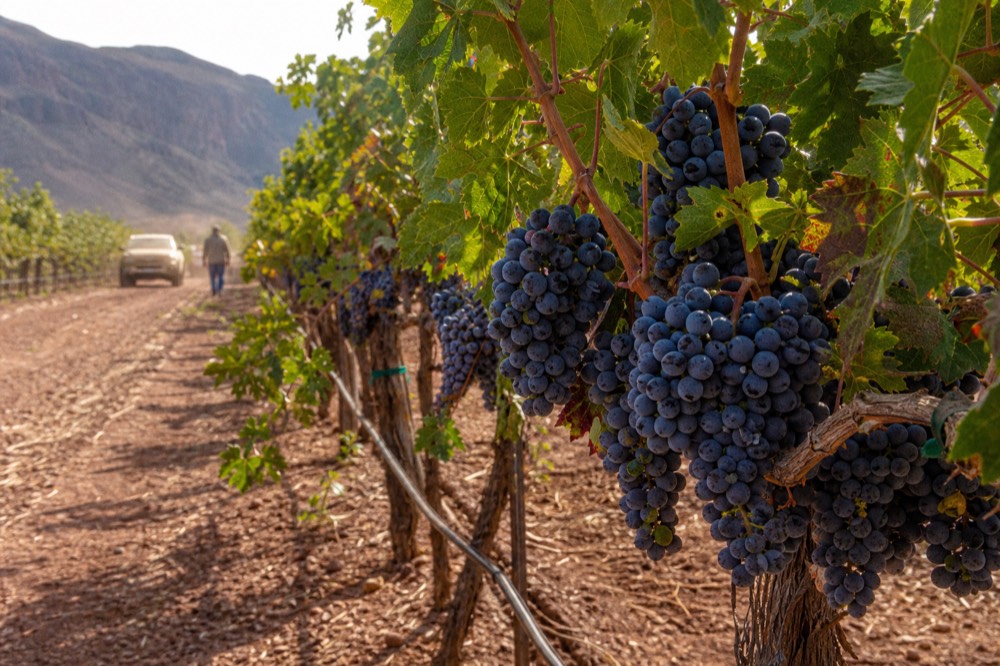
Seventeen varietals on one estate is a choice, and it is worth understanding what it signals. Old, settled wine regions narrow down: a Barolo producer plants Nebbiolo and stops. Young regions do the opposite, because nobody yet knows for certain which grapes will reward this particular combination of elevation, heat and a 175 to 200 day growing season. Arizona's wine industry is still inside that experimental window. Planting breadth is how a young appellation finds its answer.
That is also why the regional list reads the way it does. Rhône and Italian varieties dominate because they were bred in hot, sunny, dry places and behave sensibly in one. The Bordeaux and Burgundy grapes are here too, but they sit in the second rank rather than the first.
| Grape | Tradition it comes from | Role in the valley's plantings |
|---|---|---|
| Syrah | Rhône | leading red |
| Sangiovese | Italian | leading red |
| Barbera | Italian | leading red |
| Malvasia Bianca | Italian | leading white |
| Cabernet Sauvignon | Bordeaux | supporting red |
| Petite Sirah | French (Durif) | supporting red |
| Chardonnay | Burgundy | supporting white |
| Picpoul Blanc | Southern France | supporting white |
| Seyval Blanc | French-American hybrid | supporting white |
I will not tell you what a specific bottle here tastes like, because tasting notes written by somebody who has not opened that vintage are worthless and this site does not print them. What I will say is that the regional pattern is real and useful: if you like southern Rhône reds or Italian food wines with acid and grip, this valley is built for your palate. If you came looking for cool-climate Pinot Noir, you are in the wrong state, and any tasting room that pretends otherwise is selling you something.
The official trail keeps the current roster of member wineries and their tasting rooms at vvwinetrail.com, including the passport app that stamps your stops, and the trail and how the passport works is covered separately if you plan to collect more than a couple.
How does arriving by kayak actually work?
The estate keeps a private beach where Oak Creek meets the Verde, and kayak trips reach it through a third-party river operator rather than the winery itself. Boats come ashore on that beach, and guests then walk up through the vineyard to the tasting room. The guided version carries a $20 tasting credit at the end.
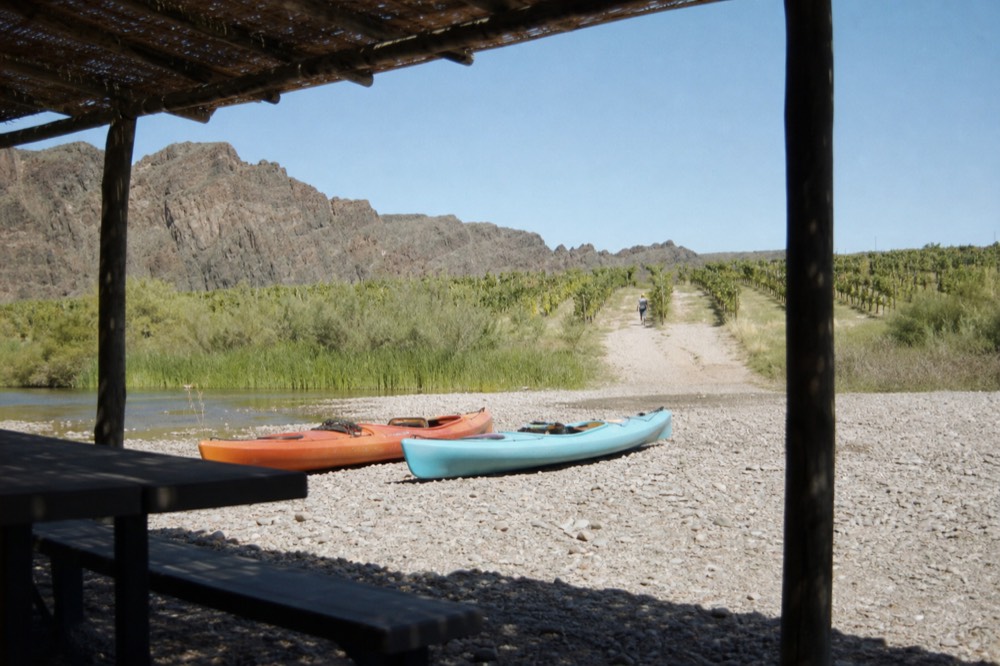
This is the part of Alcantara that no other winery in the region can copy, and it is worth being precise about how it works. The winery owns river frontage. It does not run boats. River operators run the boats and land them on the estate's beach, which is why the trip is sold as a river tour with a winery ending rather than as a winery tour with a boat attached. The walk from the sand up through the vines to the tasting room is short, and it is the transition that makes the whole thing land: you finish wet, warm and slightly tired, and then somebody hands you a glass.
The guided trip is sommelier-led, spends one to two hours on the water, starts at the vineyard in Camp Verde and finishes with that $20 credit against your tasting. It lists from $181 per person and sits at 4.8 across 412 reviews, which makes it the highest-rated experience of the twelve on this site by rating, ahead of every wine bus in the valley. That is a genuinely awkward fact for a wine tour site to print, so here it is: the best-reviewed way to spend a day in this wine region involves a paddle. If that sounds like your kind of afternoon you can see the current departure dates and price, and the kayak day planned properly covers flows, seasonality, what to wear and who should skip it.
Two things to be clear about before you picture it. The beach is private property, not a public river access point, so this is not a landing you can reach by putting your own boat in upstream and hoping. Independent paddlers on the Verde use the public access points that run from Lower TAPCO near Clarkdale down to Beasley Flat below Camp Verde, and those are a different day out entirely. Second, the paddle is genuinely gentle, flatwater with small riffles rather than anything technical, which is why people who have never held a paddle book it and come back happy.
The estate also runs horseback tours that cross the Verde River on the property, which is the other thing 87 acres of river bottom buys you. Between the beach, the horses, the restaurant and the tasting room, this is closer to a destination than a stop, and that is the strongest argument for not seeing it from a van window.
| How you arrive | What it costs | What you get | The catch |
|---|---|---|---|
| Drive yourself | fuel plus tasting fees on the day | full control of timing, the restaurant, a long stay | somebody has to stay sober for the drive back |
| Shared tour vehicle | from $109 to $199 per person | 2 to 4 wineries, no driving, route already solved | Alcantara is one stop among several, often 40 minutes |
| Private vehicle | from $195 per person or $469 per group | your choice of stops and pace, door to door | the highest per-head cost of the three |
| Guided kayak | from $181 per person | the river, the beach landing, a $20 tasting credit | you still drive to Camp Verde to start |
Should you visit Alcantara independently or on a tour?
Go independently when Alcantara itself is the point of the day and one person in the car is not drinking. Take a tour when you want three or four wineries and nobody wants the drive. Shared seats start at $109 per person with the route and the driving handled, and the two options are not really competing for the same afternoon.
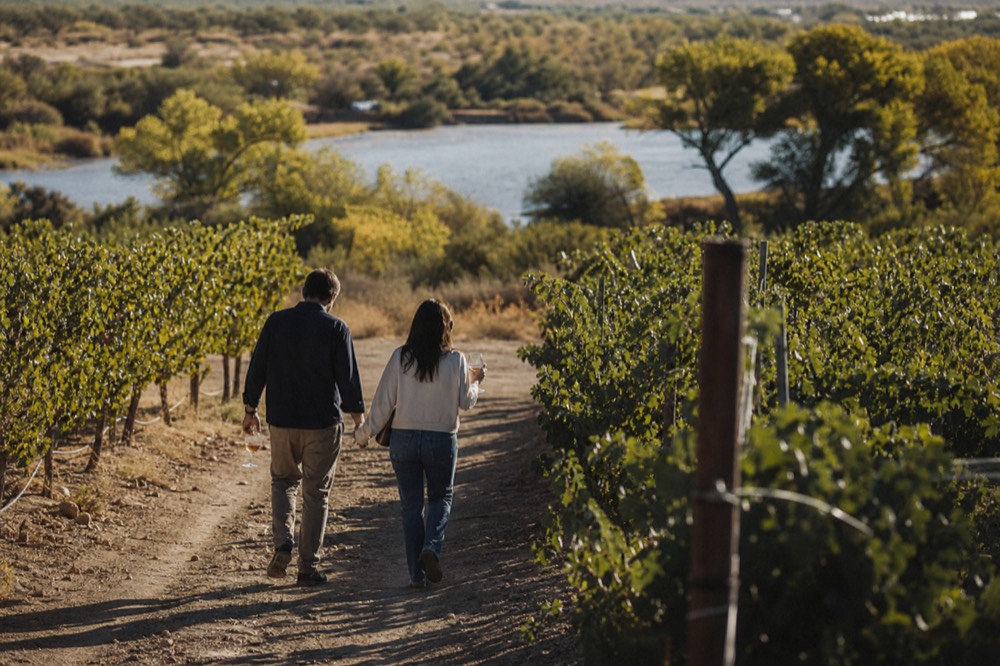
The mistake I see most often is treating this as a pure cost question. It is not. Driving yourself and taking a tour produce genuinely different days, and the choice should follow the day you want.
Drive yourself and you get depth. One estate, a long tasting, lunch on the terrace, maybe a walk down toward the water, and then you leave when you feel like leaving. You will see one winery, possibly two. You will also carry the tasting fees yourself, which are charged per person at each room and are the line item people forget when they price this out.
Take a shared tour and you get breadth plus arithmetic that quietly works in your favour. The all-inclusive shared run includes every tasting fee and a made-to-order lunch at $199 per person across two wineries with five to six pours at each, which stops being expensive the moment you add up what four separate tastings and a restaurant lunch actually cost. The limo-style bus goes the other way: $109 per person, up to four wineries, a charcuterie picnic, and tasting fees itemised on the listing rather than bundled. Read that line on any listing before you compare prices, because it moves the real number more than the headline does.
| Driving yourself | Shared tour seat | Private vehicle | |
|---|---|---|---|
| Headline cost | fuel only | $109 to $199 per person | $195 per person or $469 per group |
| Wineries in a day | 1 to 2 realistically | 2 to 4, fixed route | 3 to 4, your choice |
| Tasting fees | always yours | included on some listings, itemised on others | included on some listings, itemised on others |
| Who drives | one of you, sober all day | included | included |
| Timing control | total | fixed pickup and return window | flexible pickup |
| Time at Alcantara | as long as you want | typically one stop within a 5 to 7 hour day | one stop, length negotiable |
| Best for | one long lunch at a single estate | a first visit, and cost control | groups of four to six with opinions |
For a group that wants Alcantara plus three more without a stranger on board, the private luxury SUV runs up to six people for five hours through Cove Mesa, Javelina Leap, Alcantara and Oak Creek Vineyards at $469 for the vehicle, and you can check availability for your dates to see how the per-head figure lands once you split it. The wider set of private door-to-door options covers the cheaper per-person private runs too, which suit couples better than a whole-vehicle price does.
How long is the drive, and does the highway work matter?
About 35 minutes from Uptown Sedona to Alcantara in Camp Verde, 30 to Old Town Cottonwood, 25 to 35 to the Page Springs cluster, and roughly two hours from Phoenix. The variable is I-17: southbound has run at one lane around the clock at the Sedona turnoff, milepost 299, since late April 2026.
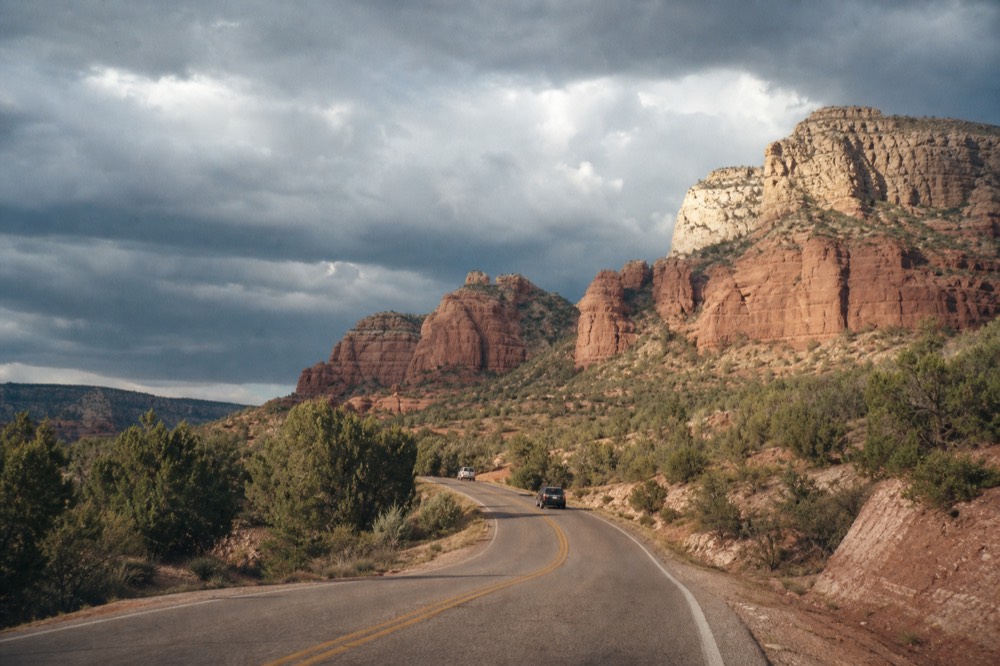
Distance in this valley is deceptive. Nothing is far, but everything involves a two-lane road with a speed limit that assumes you are not in a hurry, and the return leg up SR-89A into Sedona takes longer than the outbound run almost every time. Guests consistently underestimate that climb back up, then wonder why a "quick" afternoon turned into six hours.
| From Uptown Sedona to | Approximate drive | What is there |
|---|---|---|
| Page Springs and Cornville cluster | 25 to 35 min | Page Springs Cellars, Javelina Leap, Oak Creek Vineyards |
| Old Town Cottonwood | about 30 min | the tasting-room strip, Merkin, Arizona Stronghold |
| Alcantara, Camp Verde | about 35 min | the confluence estate, the kayak beach, the restaurant |
| Clarkdale depot | about 40 min | Verde Canyon Railroad departures |
| Jerome | about 45 min | Caduceus Cellars, the Original Jerome Winery |
| Phoenix or Scottsdale | about 2 hours to Sedona | the main feeder route, via I-17 |
The road work is the thing to plan around if you are coming up from Phoenix. Southbound I-17 has been narrowed to a single lane 24 hours a day at milepost 299, the Sedona turnoff, since April 26, 2026, while bridge deck work over SR 179 goes on, and it bites hardest at peak times. Separately, overnight lane closures started on June 5, 2026 along a ten-mile paving stretch north of the Sunset Point Rest Area. Neither closes the corridor. Both add time to a Sunday afternoon drive home, and both are reasons to book a tour with a Sedona pickup rather than drive down and back yourself on a busy weekend.
One more thing about pickups. "From Sedona" on a tour title can mean door-to-door at your hotel, or it can mean a meeting point that is itself a drive away. The kayak trip is the clearest example: it starts at the vineyard in Camp Verde, about 35 minutes out, and does not collect from Sedona at all. That is not a criticism of the trip, which is excellent. It is a thing to know before you book a 9am start.
When should you actually go?
The tasting room keeps the same 11am to 5pm hours every day of the year, so the season changes the surroundings rather than the access. Harvest work runs from late summer into autumn on a growing season of 175 to 200 days, and the region's single busiest date is the Cottonwood wine festival on May 9, 2026.
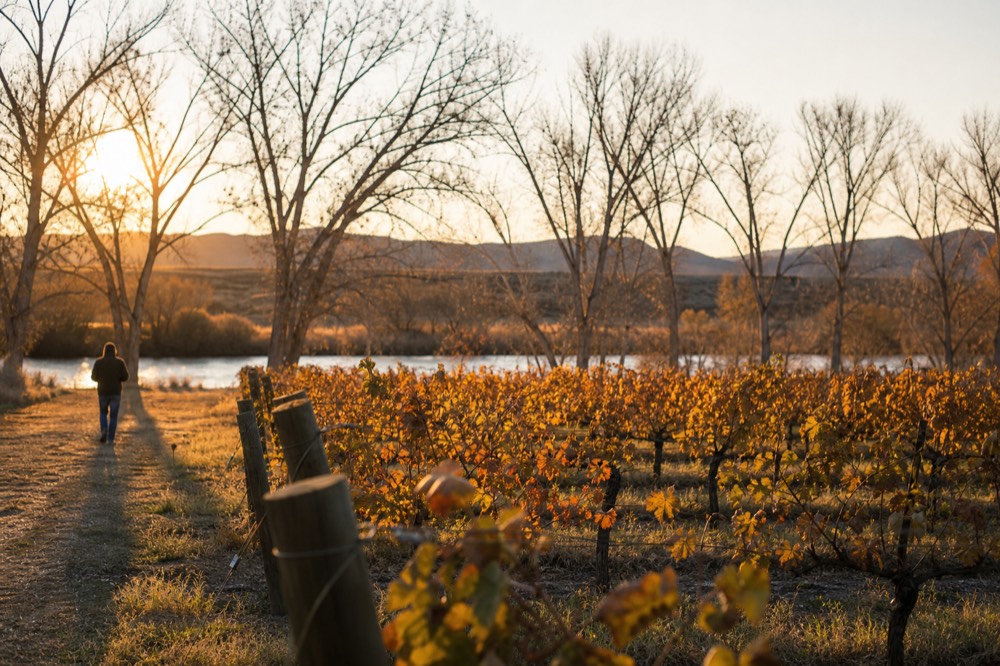
Because the hours never change, the question is not when the winery is open but when the estate is worth your time, and those are different answers. The river matters here in a way it does not at a hillside winery in Cornville. Spring runoff and late-summer monsoon both change what the water below the vines is doing, and the beach is a different place in April than it is in October.
| Season | The estate | What else is running | Booking pressure |
|---|---|---|---|
| Spring, March to May | vines leafing out, the river full and cold | the wine festival at Riverfront Park, Cottonwood, on May 9, 2026 | rising fast, peak by late April |
| Summer, June to August | hot at midday, the terrace shade earns its keep | Saturday evening rail departures from Clarkdale, June 6 to September 12, 2026 | heavy on weekends |
| Harvest, late August to October | fruit coming in, real work happening around you | the growing season closing out at 175 to 200 days | the busiest tasting stretch of the year |
| Winter, November to February | quiet room, bare vines, the best odds of a bar to yourself | closed Thanksgiving and Christmas only | the lightest of the year |
If I had to pick one window, it would be the second half of October. The light on the vines at that point in the year is the reason people who live here still drive out to look at them, the crowds have thinned from the harvest peak, and the afternoons are warm without being punishing. February is the sleeper choice: nothing is happening, the vines are sticks, and you will have a conversation with whoever is pouring instead of shouting over a coach party. Season-by-season timing across the whole valley goes month by month if you are still choosing dates.
Weekday versus weekend is the other axis, and it moves the experience more than the month does. A Tuesday in June with a coach party in the room is worse than a Saturday in February without one. If your dates are fixed and only the day is flexible, take the weekday, and take the early opening slot rather than the mid-afternoon one. Whoever is pouring will have time for you, and time from the person behind the bar is most of what separates a good tasting from a transaction.
The one date to either target or dodge is May 9, 2026, when the 8th Verde Valley Wine Festival takes over Riverfront Park in Cottonwood from 11am to 6pm with 20-plus wineries, plus beer, spirits, food and music, co-sponsored by the Verde Valley Wine Consortium and the City of Cottonwood. If tasting broadly is the goal, that one Saturday does more work than three days of driving. If quiet is the goal, pick another weekend entirely, because the whole valley feels it.
Frequently asked questions
Do you need a reservation to taste at Alcantara Vineyards?
No. Tastings are walk-in, and the tasting room and restaurant open daily from 11am to 5pm, closing only for Thanksgiving and Christmas. That said, a private event can occupy the space at short notice, so a look at the estate's own site the morning of your visit is sensible. Larger groups are a different conversation and should call ahead rather than turn up with nine people expecting a bar.
Can you kayak to the winery on your own?
Not to the estate's beach. That landing is private property, and the trips that use it get there through a third-party river operator working with the vineyard. Independent paddlers use the public river access points instead, which run from Lower TAPCO near Clarkdale down to Beasley Flat below Camp Verde. If the beach landing and the tasting credit are what you want, the guided trip is the way to get them.
Do the wine tours include the tasting fees at Alcantara?
Some do and some do not, and the difference is real money once you multiply a fee by four wineries and two people. Each listing itemises exactly what is covered, so read that line rather than comparing headline prices. The all-inclusive shared tour bundles every tasting fee plus a made-to-order lunch into its $199 per person; the $109 limo-style bus is priced the other way. Neither is hiding anything, but they are not comparable numbers.
How old do you have to be to visit?
Every tasting in Arizona is 21 and over, with photo ID, and staff here do check. Whether a person under 21 can ride along on a wine tour without tasting is a separate question and is set by each operator individually, stated on its own listing. Do not assume the answer carries across from one tour to another, because in this region it genuinely does not.
Is Alcantara worth it if you only have one afternoon?
If your afternoon is about the river, the restaurant and a long unhurried tasting, yes, and drive yourself. If your afternoon is about tasting widely and comparing producers, no, and take a tour into the Page Springs and Cornville cluster instead, where three wineries sit within a few minutes of each other. One estate with a beach is a destination; three tasting rooms on one road is a survey. Decide which you came for.
What else is there to do on the property besides taste?
More than at most wineries in the state. There is a restaurant on site, so a tasting can become lunch without moving the car. There is the private beach at the confluence, where the kayak trips land. There are horseback tours that cross the Verde River on the estate itself. Add the walk down through the vines and you have a half day, which is exactly why the tour operators like it and exactly why a 40-minute stop can feel short. The adventure side of the region's tours collects the water and outdoor pairings in one place.