The Verde Valley Wine Trail in 2026: Passport App, License Plate and 30 Stops
The trail is a real, signed, officially maintained route with nearly 30 stops, a mobile passport and now its own Arizona license plate. It is also spread across six towns and a mountain, which is where most first attempts go wrong.
 By Patricia Collins, Sedona wine tour specialist & Verde Valley experience guide
Short answer
The Verde Valley Wine Trail is the official route through Arizona's Verde Valley AVA, linking close to 30 vineyards and tasting rooms across Cottonwood, Cornville, Page Springs, Camp Verde, Clarkdale and Jerome. You check in through a mobile passport app, and a specialty Arizona plate funds the consortium behind it.
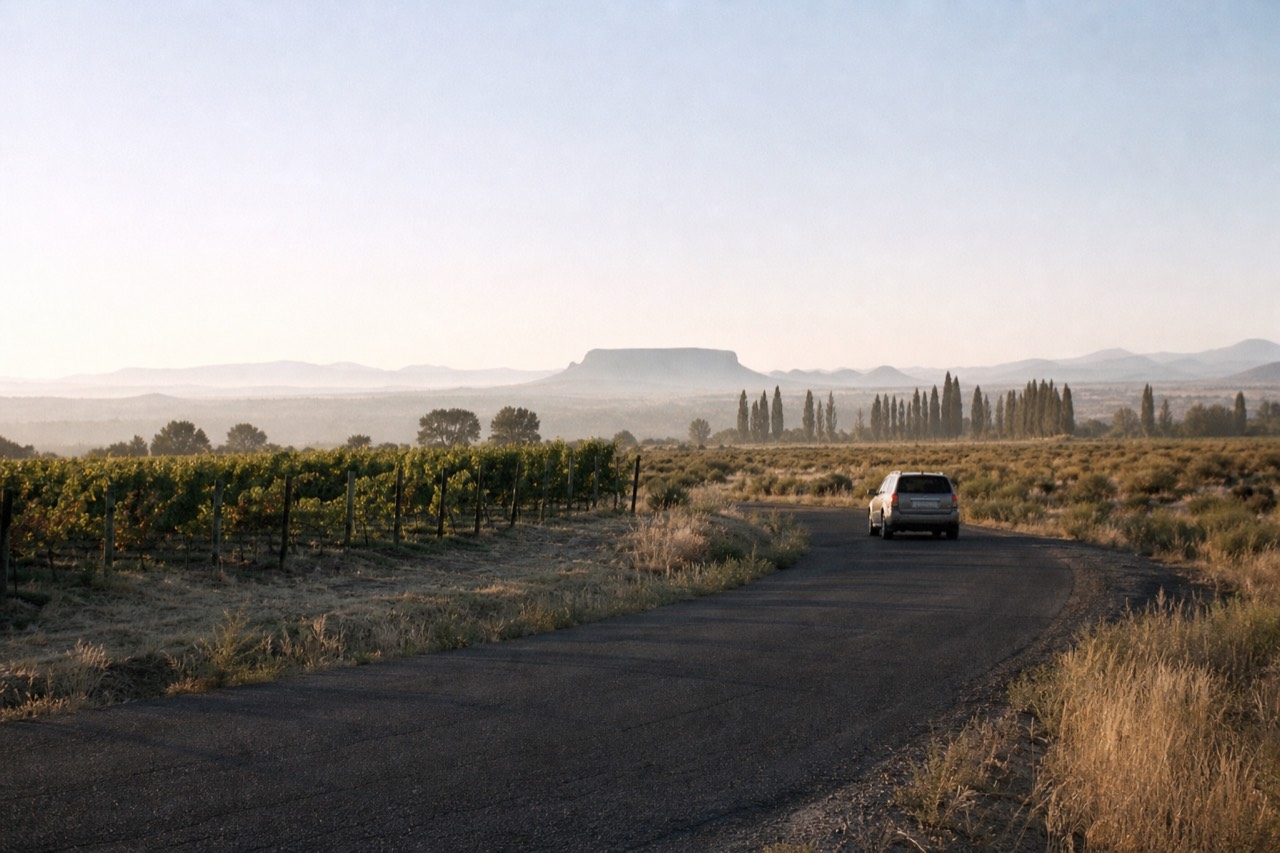
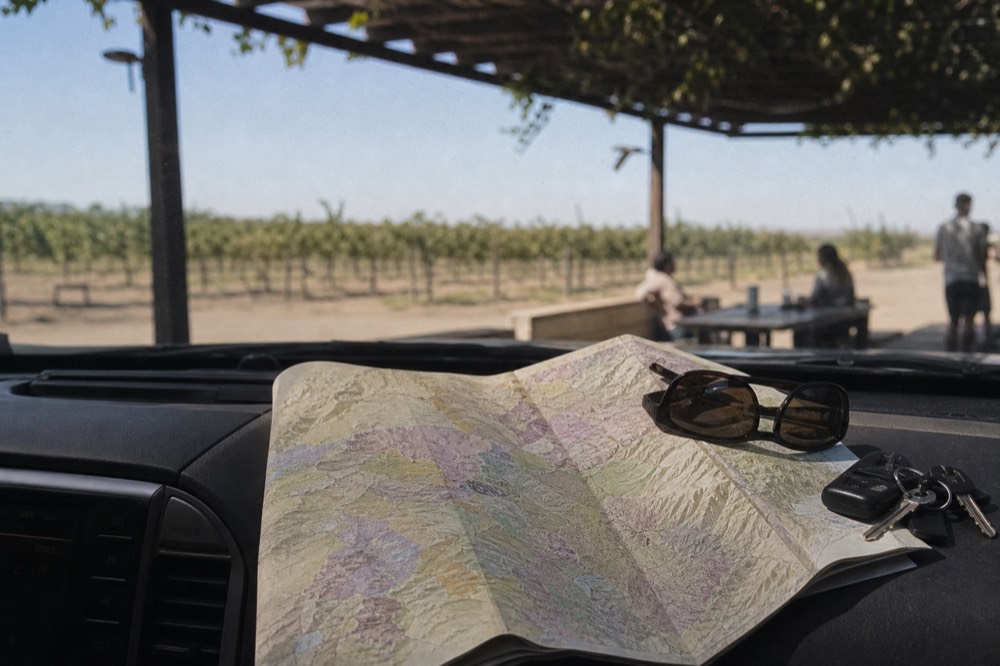
There is a moment on almost every first attempt at this trail where somebody in the car opens the map, sees Jerome sitting a thousand feet up a mountain from Cottonwood, and quietly recalculates the whole day. The Verde Valley Wine Trail is not a loop you can drive in an afternoon. It is close to 30 stops scattered across six communities and about 200 square miles, and treating it as a checklist is the fastest way to have a bad time on a road that deserves better.
What follows is how it actually works: the passport, the plate, the segments, and the honest arithmetic on whether to drive it or hand the keys to somebody else.
What is the Verde Valley Wine Trail, exactly?
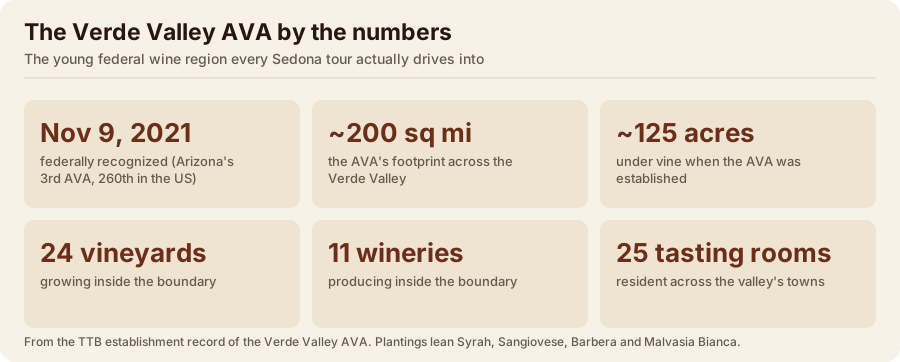
It is the official self-guided route through the Verde Valley American Viticultural Area, maintained by the Verde Valley Wine Consortium. The trail map links close to 30 vineyard and tasting-room stops across Cottonwood, Cornville, Page Springs, Camp Verde, Clarkdale and Jerome, inside an AVA of roughly 200 square miles holding about 125 planted acres.
The AVA underneath it was established by the Alcohol and Tobacco Tax and Trade Bureau on November 9, 2021, making it Arizona's third and the 260th in the United States. That federal recognition matters more than it sounds. It gave a scattered group of growers a shared identity, and the trail is the consumer-facing version of that identity: one map, one brand, one route people can follow without knowing which winery is which.
Inside the AVA sit 24 vineyards and 11 wineries feeding roughly 25 tasting rooms. The gap between 11 wineries and 25 rooms is the interesting part, because it tells you that a lot of what you taste on this trail is poured somewhere other than where it was made. Old Town Cottonwood in particular is a street of storefront rooms rather than production facilities, and that is by design.
What grows here shapes what you taste along the route, and it is not what most American visitors expect. The valley leans Rhône and Italian: Syrah, Sangiovese, Barbera and Malvasia Bianca carry the plantings, with Cabernet, Chardonnay, Picpoul Blanc, Petite Sirah and Seyval Blanc filling in around them. A growing season of 175 to 200 days at high-desert elevation, with wide swings between day and night temperature, gives these wines more acid and less weight than their alcohol levels suggest. Arrive expecting California and you will misread every glass on the trail.
The consortium behind it, reachable through the official trail site, also runs the region's flagship event. The Verde Valley Wine Festival picked up a 2025 Arizona Travel Award, which is the kind of recognition that tends to be followed by a noticeable jump in weekend traffic.
| Verde Valley Wine Trail | Detail |
|---|---|
| Stops on the trail map | Close to 30 |
| AVA established | November 9, 2021, by the TTB |
| AVA rank | Arizona's third, 260th in the US |
| AVA area | About 200 square miles |
| Planted acres | About 125 |
| Vineyards | 24 |
| Wineries | 11 |
| Tasting rooms | About 25 |
| Communities | Cottonwood, Cornville, Page Springs, Camp Verde, Clarkdale, Jerome |
| Passport | Mobile check-in app |
| Signature grapes | Syrah, Sangiovese, Barbera, Malvasia Bianca |
How does the trail passport work now that there is an app?
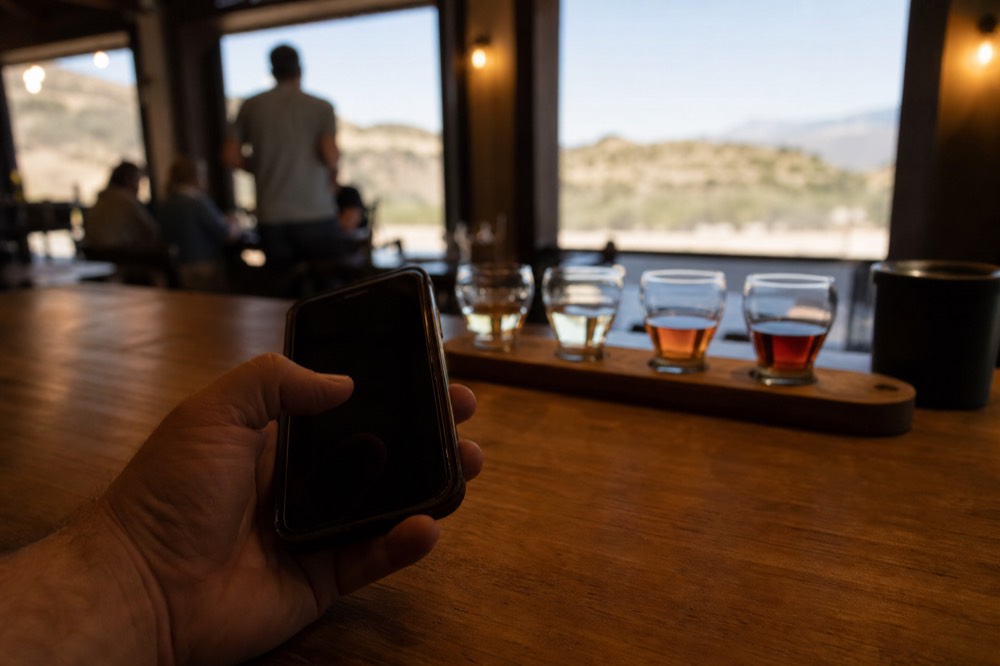
The trail runs a mobile passport app that records check-ins as you visit stops, replacing the older stamped paper passport. You check in at each tasting room on your phone rather than hunting for someone with a stamp, and your progress along the trail is tracked in the app across visits rather than being tied to one trip.
The practical improvement is not the technology, it is the pacing. A paper passport pushed people to hit as many stops as possible in one weekend so the booklet did not go stale in a drawer. A phone-based record removes that pressure. You can taste three rooms on this trip, four next spring, and the trail does not care.
That change suits this region specifically. Because the stops are spread across six communities separated by real driving, and because a full circuit involves a mountain road, the honest way to do the whole trail is over several visits rather than in one heroic push. The app makes that the normal path instead of the compromise.
Check-ins work at whatever pace you set, and nothing about the passport obliges you to drive between stops yourself. Guests on a guided day check in exactly the same way at each winery the vehicle stops at, which is worth knowing if you had assumed the passport was a self-drive-only thing. It is not.
| Passport option | How it works | Best for |
|---|---|---|
| Mobile passport app | Check in at each stop from your phone, progress saved between trips | Anyone doing the trail over multiple visits |
| Check in while on a guided tour | Same app, same check-ins, someone else drives | Groups who want the record without the driving |
| No passport at all | Just visit and taste, nothing tracked | One-day visitors with a fixed short list |
One thing the app does not do is book anything for you. Tasting-room reservations, winery tours and table times are handled by each property. On a weekend in spring or autumn that distinction bites, because the popular rooms fill and a check-in app will not hold you a spot.
The other thing worth settling before you start is ID. Every tasting on this trail is 21 and over with valid identification, no exceptions and no discretion at the counter. Whether a younger member of your party can ride along on a guided tour without tasting is a separate question entirely, and each operator sets its own policy on that, stated on its own listing. Do not assume the answer from one tour applies to another, because it frequently does not.
Hours are the other thing the passport will not warn you about, and they vary more than a single trail brand suggests. Page Springs Cellars runs Sunday through Wednesday 11 am to 6 pm and Thursday through Saturday 11 am to 8 pm. Caduceus in Jerome opens 11 am to 6 pm Sunday through Thursday and to 7 pm Friday and Saturday. D.A. Ranch only runs its vineyard walks Wednesday through Saturday, with starts at 11 am, noon or 1 pm. Merkin's Cottonwood trattoria holds Sunday hours to 8 pm. Build a route on the assumption that everything opens at eleven and closes at six and you will lose a stop.
How is the trail split up, and how long does each segment take?
The trail breaks into four practical segments: the Page Springs and Cornville creek road, the Old Town Cottonwood walking strip, the Camp Verde and Clarkdale river stops, and the Jerome climb. From Uptown Sedona, Page Springs is 25 to 35 minutes, Cottonwood about 30, Alcantara about 35, Clarkdale about 40, and Jerome about 45 up switchbacks.
Thinking in segments rather than in individual stops is what turns this from a confusing list into a plannable trip. Each segment has its own personality and its own logistics, and mixing two of them in a day works only for certain pairs.
The creek road through Page Springs and Cornville is the vineyard segment. Page Springs Cellars, Javelina Leap, Oak Creek Vineyards and D.A. Ranch sit close enough together that transitions take minutes, and this is where you actually see fruit on vines. Old Town Cottonwood is the opposite: six wine and spirit tasting rooms sit on Main Street itself, steps apart, with more than fifteen storefront rooms across the wider Old Town area. You park once and walk.
Camp Verde and Clarkdale are the river segment. Alcantara Vineyards sits at the confluence with a tasting patio and a kayak takeout, and the Clarkdale depot is where the Verde Canyon Railroad boards. Jerome is its own animal, a former copper town on the side of Cleopatra Hill with Caduceus Cellars, the Original Jerome Winery and Cabal Cellars, reached by a road with an alarming number of curves.
| Segment | Approx. from Uptown Sedona | Character | Anchor stops |
|---|---|---|---|
| Page Springs / Cornville | 25 to 35 min | Actual vineyards, short hops between rooms | Page Springs Cellars, Javelina Leap, Oak Creek Vineyards, D.A. Ranch |
| Old Town Cottonwood | ~30 min | Walkable storefront strip, park once | Arizona Stronghold, Cellar 433, Rubrix, Merkin Trattoria |
| Camp Verde / Clarkdale | 35 to 40 min | River estate and rail depot, spread out | Alcantara Vineyards, Verde Canyon Railroad |
| Jerome | ~45 min, uphill switchbacks | Hill town, short dense wine walk, tiring drive | Caduceus Cellars, Original Jerome Winery, Cabal Cellars |
Pairs that work: creek road plus Camp Verde, or Cottonwood plus Jerome. Pairs that do not: anything plus Jerome if you have been tasting all afternoon, because that descent at dusk with flights behind you is a genuinely poor idea. The creek-road segment gets its own full write-up in the Page Springs and Cornville cluster guide, and the walking strip in the Old Town Cottonwood tasting guide.
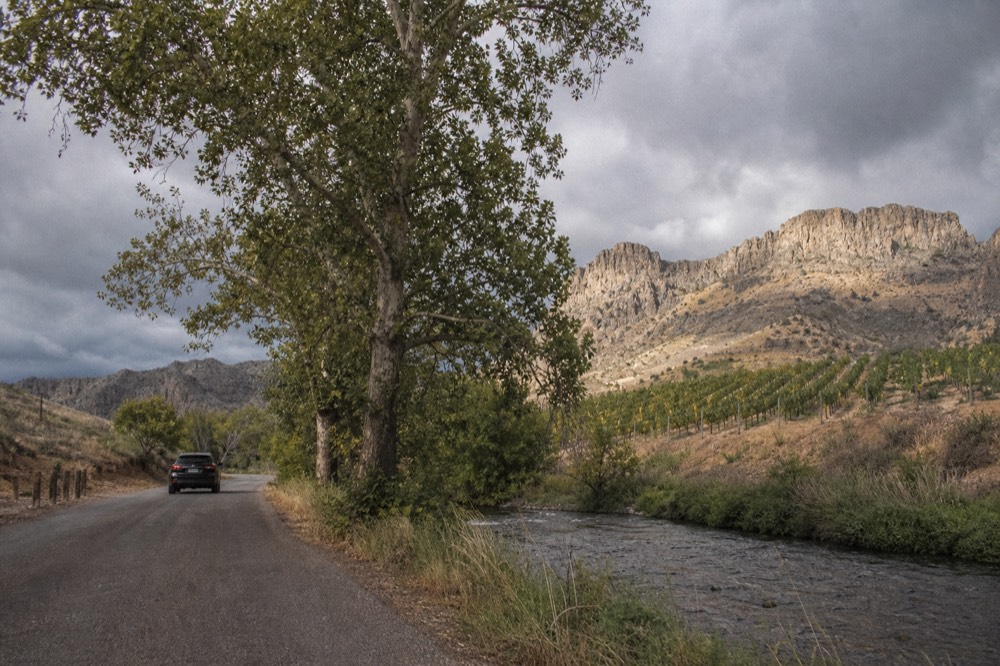
What is the Arizona wine trail license plate, and what does it fund?
Arizona's Department of Transportation rolled out a Verde Valley Wine Trail specialty plate, one of three new plates unveiled at the end of 2025. It costs $25 a year, and $17 of that goes to the Verde Valley Wine Consortium to support sustainable vineyard practices. The rest covers the state's administrative side, as with every Arizona specialty plate.
Seventeen dollars per plate per year sounds small until you consider the scale of what it funds. This is a 125-acre growing region. A few thousand plates on Arizona cars represents real money against a farming base that size, directed at water use, soil and vineyard practice rather than at marketing.
It is also the clearest signal yet that this region has moved from novelty to institution. Specialty plates in Arizona get approved for causes with organised constituencies behind them, and the plate arriving alongside a 2025 Arizona Travel Award for the region's festival puts the Verde Valley in a different category than it occupied five years ago.
Sustainable practice is not an abstract cause in this valley either. Water is the constraint on every acre planted here, and a growing region of 125 acres sitting along the Verde River and Oak Creek has a direct stake in how that water gets used. Directing plate money at vineyard practice rather than at advertising is a fairly unglamorous choice for a group that could have spent it on visibility.
For visitors the plate is not something you need, and no tasting room is going to check. It matters as context: when you pay a tasting fee here, you are funding a genuinely small farming community that has organised itself well enough to get a state plate. Residents can order through the consortium's plate page.
| Arizona wine trail plate | Amount |
|---|---|
| Annual fee | $25 |
| To the Verde Valley Wine Consortium | $17 |
| Remainder | State administrative costs |
| Purpose of the donation | Sustainable vineyard practices |
| Announced | Late 2025, among three new ADOT specialty plates |
| Who can order | Arizona vehicle registrants |
Which guided tours cover which part of the trail?
Guided tours from Sedona cover one segment well and the rest not at all. Every shared run works the Page Springs, Cornville and Camp Verde stops. None of them go to Old Town Cottonwood or Jerome. If those two segments are your priority, you need your own car or a private vehicle that will build a custom route.
This is the single most useful fact for anyone matching the trail against a tour listing, and it is not something the listings themselves make obvious. The shared operators are solving a routing problem: six or seven hours, Sedona pickup and drop, four stops with parking, capacity and patios for a group. Page Springs and Cornville deliver that. A walkable historic street does not, and neither does a mountain switchback.
The four-vineyard shared run is the widest of them: four vineyards plus Toppers Rhum distillery and a cheese shop with a picnic lunch, five to six and a half hours, from $109 per person, and you can check current dates and pricing if breadth is what you want. The small-group Sprinter option covers four boutique wineries including D.A. Ranch with a sit-down lunch over six hours from $125, which trades one stop for a better meal, and you can see how its route is currently set. For three hours rather than a full day, an express run hits two vineyards with a charcuterie board from $79.
| Trail segment | Shared tours | Private tours | Self-drive |
|---|---|---|---|
| Page Springs / Cornville | Yes, all of them | Yes | Yes |
| Camp Verde (Alcantara) | Yes, most | Yes | Yes |
| Clarkdale depot | Rail experience only | Sometimes | Yes |
| Old Town Cottonwood | No | Custom routes only | Yes |
| Jerome | No | Custom routes only | Yes |
Private options change the picture. A private door-to-door run builds a custom three or four stop route through Page Springs Cellars, Alcantara and D.A. Ranch from $195 per person, and a private luxury vehicle for up to six covers Cove Mesa, Javelina Leap, Alcantara and Oak Creek Vineyards over five hours at $469 for the group. If you want a segment nobody else services, that is the category to look at, and the private wine tours are compared properly on their own page. The full lineup of shared runs sits at the shared vineyard lineup.
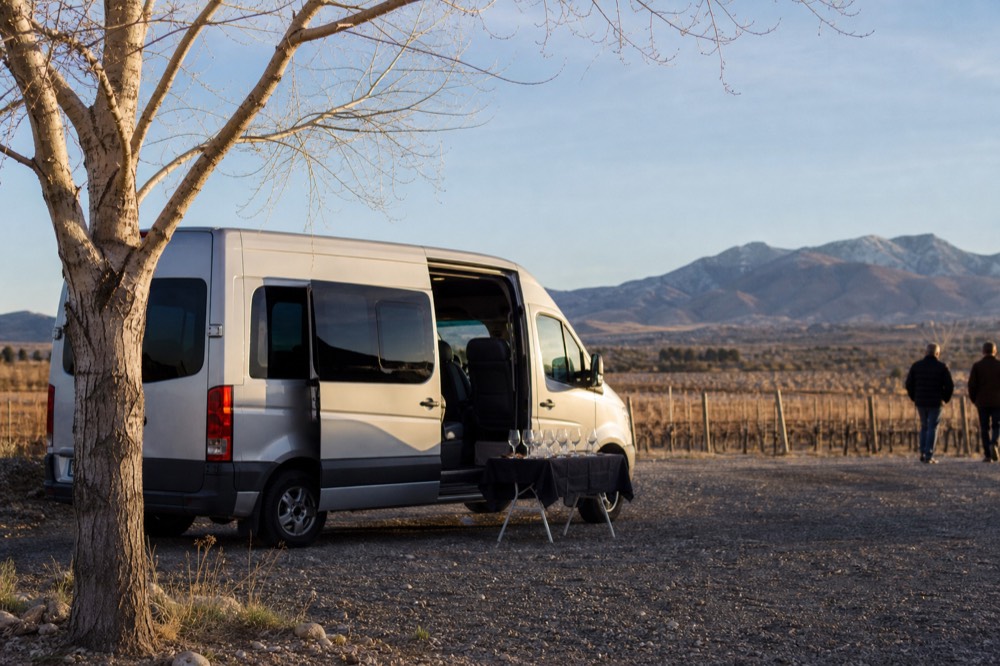
Is it actually cheaper to drive the trail yourself?
Usually not, once you count real published fees and the sober driver. Page Springs Cellars charges $39 to $57 for a tour with tastings, D.A. Ranch charges $55 for its vineyard walk with a four-wine tasting, and Merkin's hilltop barrel room runs from $30 with an estate tasting. Three stops sits near $130 per drinking person before food or fuel.
Set that against a shared day starting at $109 per person, or $199 for the all-inclusive run where every tasting fee and a made-to-order lunch are covered, and the supposed savings evaporate. The wrinkle everyone forgets is that the designated driver still pays. They still walk the vineyard, still take the tour, and on most published rates they still hand over money to not drink. Page Springs at least offers a non-tasting rate, $22 to $37 depending on the tour, which is a fairer deal than most regions give a driver.
Run the math for four people doing three trail stops themselves. Three drink at roughly $130 each, that is $390, plus the driver's non-tasting rate where one exists, plus fuel, plus lunch. Total spend lands well past $450 and only three of the four are actually tasting. The four-vineyard shared day at $109 each is $436 for four people who all drink, all get a picnic, and none of whom drive a switchback afterwards.
| Four people, three trail stops | Self-drive | Shared four-vineyard day |
|---|---|---|
| Cost per drinking person | ~$130 in fees | $109 |
| People who can drink | 3 of 4 | 4 of 4 |
| Group tasting spend | ~$390 | $436 |
| Driver's cost | Non-tasting rate plus fuel | None |
| Lunch | Extra | Picnic included |
| Stops covered | 3 | 4 vineyards plus distillery and cheese shop |
| Driving after tasting | Yes, one person | No |
For a couple the arithmetic is starker still, because one of two people is the whole designated-driver problem. Half your party does not drink. Three trail stops at published rates costs about $130 for the one person tasting, plus whatever the driver pays to walk along, and you have spent a day on the trail with one taster. Two seats on a shared day at $109 each puts both of you in the same tasting rooms, both drinking, for $218. That is the case where being driven stops being a luxury and becomes the cheaper way to get what you came for.
The honest counterpoint: self-driving is the only way to reach Cottonwood or Jerome on a shared budget, and it is the only way to sit somewhere for three hours because you liked it. Guided days run to a schedule and the schedule wins. Whether tasting fees are included varies by listing, so read that line before treating two prices as equivalent. The all-inclusive shared run at $199 is the one that explicitly covers every fee plus a made-to-order lunch, with five to six pours at each of Page Springs Cellars and Javelina Leap, and it is the only listing where the number you pay is genuinely the number you spend.
What happens on the trail through the year?
The trail runs year-round but its texture changes completely by season. Harvest tours at Page Springs Cellars begin mid-August. D.A. Ranch runs vineyard walking tours Wednesday through Saturday all year at 11 am, noon or 1 pm. The growing season runs 175 to 200 days, so vines are bare from late autumn until spring.
Spring is when the trail feels newest: bud break on the vines, mild temperatures on the valley floor, tasting rooms not yet slammed. Summer on the valley floor gets hot enough that the smart move is a late schedule, which is why Page Springs runs to 8 pm Thursday through Saturday and why so many rooms put their events in the evening.
Autumn is the peak and deservedly so. Harvest activity is visible, the estate tours shift to their harvest version, the light through the creek-side vineyards in late October is the best it gets all year, and the whole valley smells faintly of fermentation. It is also the busiest window, so reservations stop being optional.
Winter is quiet, cool and underrated for anyone who dislikes crowds. Some smaller rooms trim their days, the vines are bare sticks, and the drive down from Jerome in the dark is not something I would plan on purpose. The Verde Valley Wine Festival, the consortium's flagship event and a 2025 Arizona Travel Award winner, is the anchor date most regulars build a trip around.
| Season | On the trail | Watch for |
|---|---|---|
| Spring | Bud break, mild valley temperatures, events restarting | Weekend reservations at popular rooms |
| Summer | Hot valley afternoons, late tasting-room hours, evening events | Plan late starts, Page Springs runs to 8 pm Thu to Sat |
| Late summer | Harvest tours begin mid-August at Page Springs | Harvest estate tour at $57 with five tastings |
| Autumn | Harvest activity, best vineyard light, busiest weekends | Book ahead, expect full rooms |
| Winter | Quiet, cool, some reduced hours | Short days, avoid the Jerome descent after dark |
| Year-round | D.A. Ranch vineyard walks Wed to Sat, 11 am to 1 pm starts | $55 with four-wine tasting and logo glass |
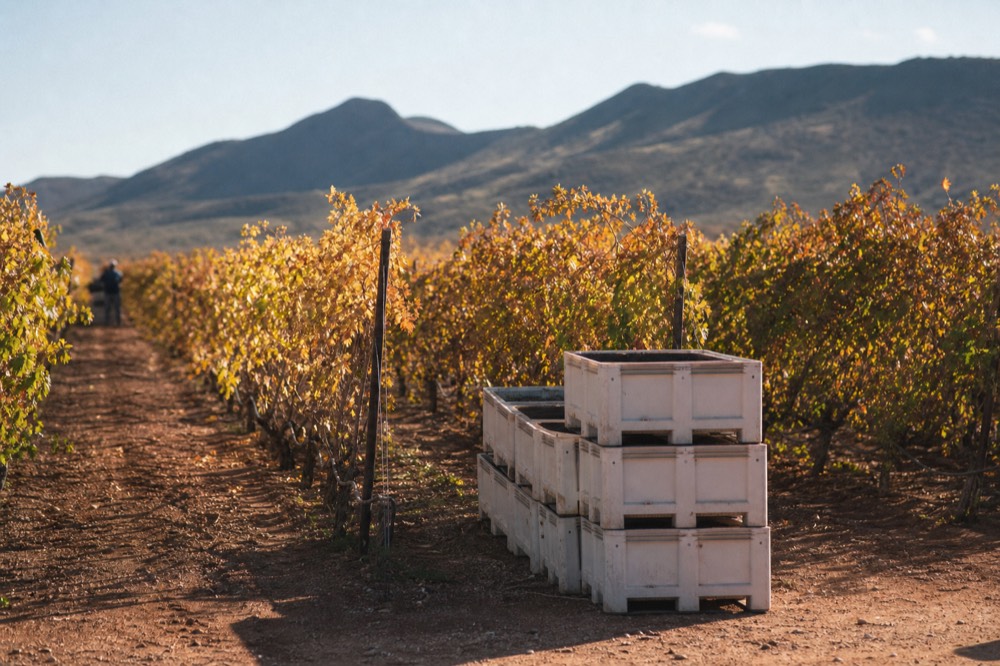
Which trail stops should a first-timer actually choose?
Pick one anchor vineyard that runs a real estate tour, one walkable street stop, and one experience that is not a tasting counter. Page Springs Cellars or D.A. Ranch for the first, Old Town Cottonwood for the second, and either the Verde River paddle or the Clarkdale rail car for the third. That covers what the region does well without turning the day into a scramble.
The reason to start with an estate tour rather than a tasting bar is that it teaches you the place. Page Springs Cellars runs three tiers: a summer cellar tour with four tastings at $39 or $22 without, a standard estate tour with five tastings at $45 or $25 without, and during harvest an estate version with five tastings at $57 or $37 without. D.A. Ranch takes the other approach, a walking tour through the actual vineyard Wednesday through Saturday at 11 am, noon or 1 pm, $55 including a four-wine tasting and a logo glass. If you only book one thing on the whole trail, book one of those.
The walkable stop is the counterweight. After an hour of structured explanation you want a street where you can drift between rooms without checking a schedule, and Old Town Cottonwood is the only place on the trail that offers it. Six wine and spirit tasting rooms sit on Main Street itself, Arizona Stronghold at 1023 N Main, Cellar 433 and Odyssey Cellars at 909 N Main, Rubrix at 1040 N Main, with Merkin's trattoria just off the strip at 770 N Verde Heights Drive keeping Sunday hours to 8 pm.
The third pick is the one people skip and then wish they had not. Neither the paddle nor the railroad is a tasting room, and both give you a view of this valley that a counter cannot. Alcantara sits at the river confluence and takes the kayak arrivals, which is covered in the Alcantara Vineyards guide.
| First-timer pick | Where | What it costs | Why it earns the slot |
|---|---|---|---|
| Page Springs estate tour | Page Springs | $45 with 5 tastings, $25 without | Structured introduction to how the valley grows and makes wine |
| D.A. Ranch vineyard walk | Cornville | $55 with 4-wine tasting and glass | The only guided walk that goes through the vines themselves |
| Old Town Cottonwood strip | Cottonwood | Per room | Park once, walk between six Main Street rooms |
| Caduceus Cellars | Jerome | Per pour | The most distinctive wine in Arizona, if you want the drive |
| Verde River paddle to Alcantara | Camp Verde | $181 with $20 tasting credit | Highest-rated wine experience in the region, 4.8 across 412 reviews |
| Verde Canyon rail car | Clarkdale | from $202 | Southwest wines and cheeses with winemaker commentary |
How do you plan a realistic two-day trail run from Sedona?
Two days covers the trail properly if you split it by segment rather than by stop count. Day one: a guided vineyard day through Page Springs, Cornville and Camp Verde so nobody drives after tasting. Day two: drive yourself to Old Town Cottonwood, park once, walk the strip, then decide whether Jerome is worth the climb.
That sequence solves the trail's central problem, which is that its two halves want opposite things from you. The vineyard segment rewards being driven, because the stops are spread out and the pours are generous. The Cottonwood and Jerome segment rewards having your own car, because no shared tour goes there and you want the freedom to stay somewhere longer than a schedule allows.
If you have a third day, the trail also touches experiences that are not tasting-room visits at all. A sommelier-led Verde River paddle ends at Alcantara with a $20 tasting credit and holds the highest rating of any wine experience in the region at 4.8 across 412 reviews, which is a slightly awkward thing for a wine trail to admit. The Verde Canyon Railroad runs a first-class car out of the Clarkdale depot pairing Southwest wines with cheeses and winemaker commentary over four hours from $202. Both live under the wine adventure tours, and the railroad gets its own page in the Grape Train Escape guide.
Coming from the metro area instead of staying in Sedona, the drive is about two hours each way, which makes a single-day trail attempt tight. A Phoenix day tour that includes a Page Springs tasting exists for people who would rather not drive it, from $450 on a new listing with no reviews yet, so judge it on its itinerary rather than on social proof it has not accumulated. Across the twelve tours running this region there are 2,424 traveller reviews in total, and all but one cancel free up to about 24 hours out. The exception is the elite private ride, which is non-refundable, so treat that booking as final.
What do people get wrong about this trail?
The three recurring mistakes: treating nearly 30 stops as a to-do list, assuming a shared tour covers the whole trail, and underestimating how much the driving takes out of a tasting day. The trail is designed to be sampled across visits, and the passport app now assumes exactly that.
The checklist instinct is the strongest one and the most damaging. People arrive determined to log as many check-ins as possible, and they end up with six rushed tastings and no memory of any of them. Four stops in a day is plenty here. Three is often better, especially if one of them is a proper estate tour that runs an hour.
The second mistake produces genuine disappointment. Someone books a shared vineyard day expecting it to include Cottonwood or Caduceus, then discovers mid-route that the trail's most talked-about addresses were never on the itinerary. Read the stop list on the listing, not the tour title. "Verde Valley wine tour" covers a region with a mountain in it.
The third is physical. Between Sedona and the far end of the trail you are looking at roughly two hours of driving across a full loop, on roads that include switchbacks and a canyon descent. Add tasting to that and the return leg gets long. This is the case for handing the driving to somebody else on at least one of your days, and it is the single most common thing I tell people who ask how to structure a wine trip here. Every bookable option is compared across the twelve tours running this region, and the winery-by-winery map is in the full guide to wineries in Sedona.
Frequently asked questions
How many stops are on the Verde Valley Wine Trail?
Close to 30 vineyard and tasting-room stops appear on the official trail map, spread across Cottonwood, Cornville, Page Springs, Camp Verde, Clarkdale and Jerome. That sits inside an AVA of roughly 200 square miles holding 24 vineyards, 11 wineries and about 25 tasting rooms in total.
Do I need the passport app to visit trail wineries?
No. The app records your check-ins along the trail and saves progress between visits, but nothing about visiting a tasting room requires it. You can taste anywhere on the trail without it, and you can also use it while on a guided tour, checking in at each winery the vehicle stops at.
What does the Arizona wine trail license plate cost?
It runs $25 a year, of which $17 goes to the Verde Valley Wine Consortium to support sustainable vineyard practices. Arizona's transportation department announced it in late 2025 as one of three new specialty plates. It is for Arizona vehicle registrants, and visitors do not need it for anything.
Can a guided tour take me along the whole trail?
No single tour covers it. Shared runs from Sedona work the Page Springs, Cornville and Camp Verde stops and skip Old Town Cottonwood and Jerome entirely, because a walking strip and a switchback mountain road do not fit a six-hour group route. A private tour will build a custom route if those segments matter to you.
How many trail stops can I realistically do in one day?
Three or four, and three is often the better day. Between Sedona and the far end of the trail a full loop involves roughly two hours of driving, and a proper estate tour at somewhere like Page Springs Cellars or D.A. Ranch runs about an hour on its own. Stacking six check-ins into one day means remembering none of them.
Is the trail worth doing in winter?
Yes, if you want it quiet. The vines are bare from late autumn until spring since the growing season runs 175 to 200 days, and a few of the smaller rooms trim their hours. What you get in exchange is tasting rooms with space at the bar and no reservation scramble. Just avoid coming down from Jerome after dark.