What Is a Must Do in Sedona?
Five things in Sedona worth doing properly instead of twenty-five done badly, with 2026 Red Rock Pass costs, real crowd signals and an honest skip-it column.
 By Patricia Collins, Sedona wine tour specialist & Verde Valley experience guide
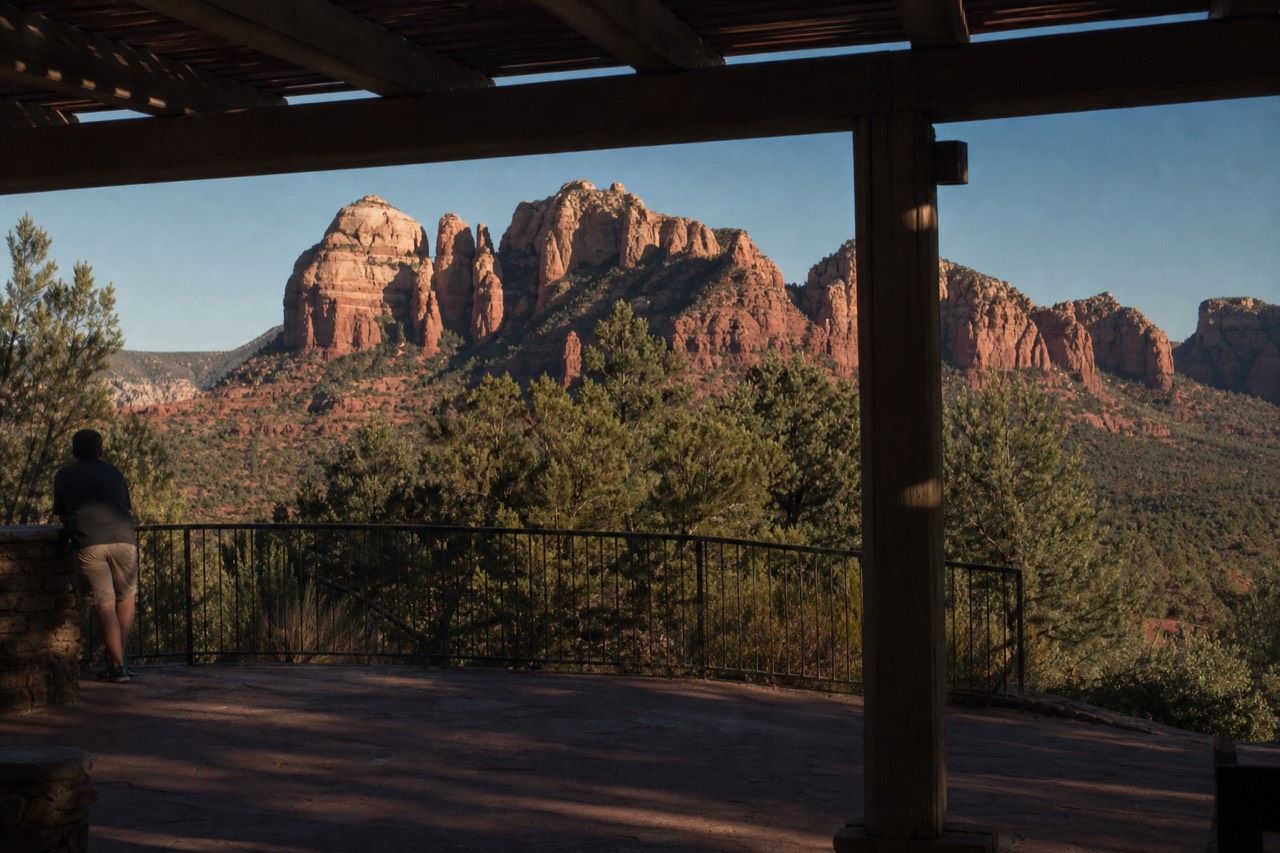
The Chapel of the Holy Cross costs nothing, takes about forty minutes, and still outranks most of what people pay for in Sedona. That tells you something about how this town's must-do lists get built. Sedona takes more than four million visitors a year, and a good share of them arrive holding a list of twenty-five attractions they will not get through, then leave having done fourteen of them badly.
So here is the shorter argument. Five things. Each one done at the right hour, with the right amount of time, and with an honest note about who should skip it.
What is the one must-do in Sedona?
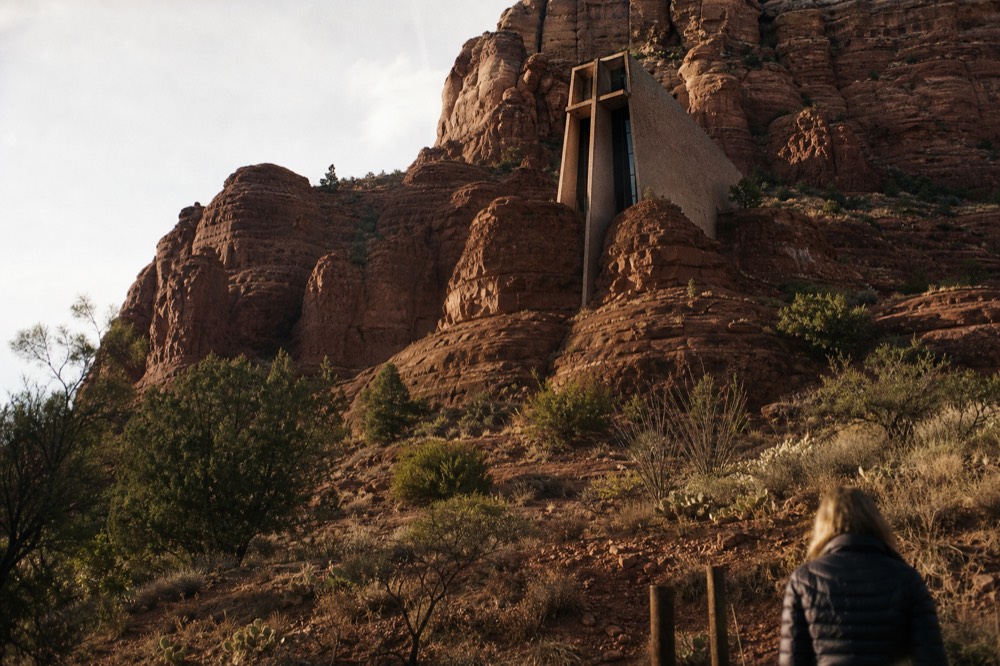
The Chapel of the Holy Cross, if you only get one. It is free, it takes under an hour, it sits wedged into the rock rather than perched on it, and it consistently ranks as the top no-cost attraction in Sedona. Go early or late. The middle of the day is a parking problem, not an experience.
I am not a churches person and I still send people there. The building was set into the butte rather than built on top of it, so the view out the window is the rock itself. It reads as architecture first and devotion second, which is why it works on visitors who have no interest in the second part.
The rest of the list earns its place differently. Here is the whole thing with the honest columns attached.
| Must-do | What it costs | Time to give it | Crowd reality | Skip it if |
|---|---|---|---|---|
| Chapel of the Holy Cross | Free | 40 to 60 minutes | Parking fills mid-morning | You are allergic to a queue and cannot go early |
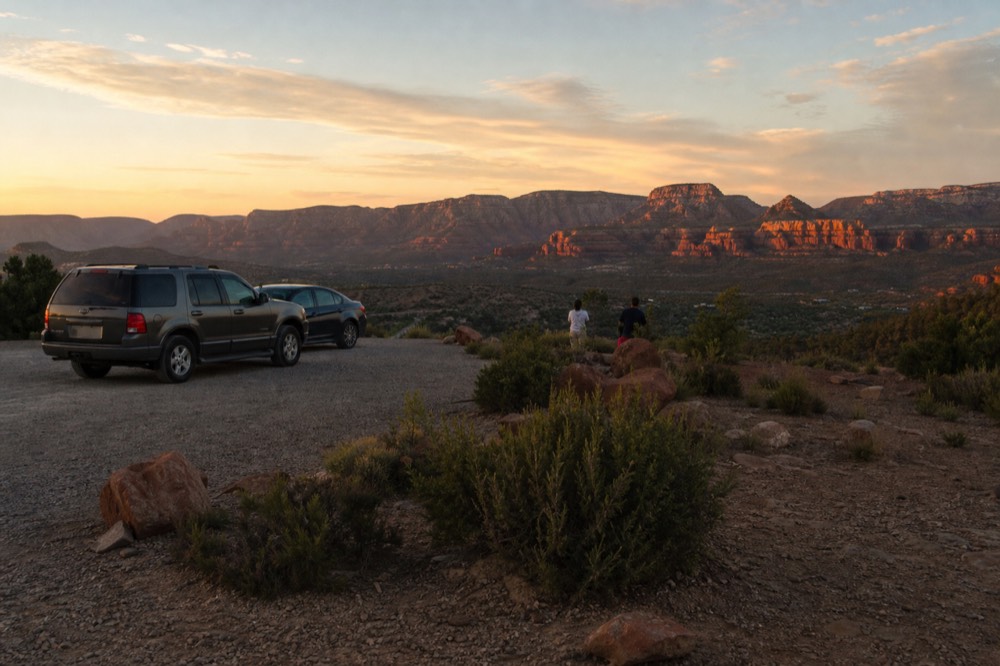
| A red rock viewpoint at golden hour | Free, $5 pass at some lots | 60 to 90 minutes | Heavy at sunset, worst on weekends | You are already doing a sunset jeep or train |
| One vortex site, early | Free, or from about $222 guided | 90 minutes | Lots often full by 9 am on weekends | You want the idea more than the walk |
| A Verde Valley tasting day | From $109 pp guided | 5 to 7 hours | Weekend seats book out first | Nobody in the group drinks |
| Montezuma Castle or Tuzigoot | Federal site fee | 60 to 90 minutes | Quietest of the five | You are on a strict one-day trip |
Notice that four of the five are free or near-free. The wine day is the outlier, and it is the outlier for a reason: it is the only one you physically cannot do yourself without giving someone the designated-driver job.
Do you need a Red Rock Pass, and what does it cost?
Yes for parking at 19 designated day-use sites around Sedona, and it is cheap. The 2026 Red Rock Pass is $5 daily, $15 weekly or $20 annual, and it covers up to five people in one vehicle. The old Grand Annual has been discontinued and replaced by a $50 Coconino Annual.
This is the single most-misunderstood line item in a Sedona budget. The pass is a parking fee for specific Forest Service lots, not an entry fee for the town, and plenty of viewpoints and roadside pullouts do not need one at all.
| Pass | 2026 price | Covers | Buy it if |
|---|---|---|---|
| Daily Red Rock Pass | $5 | One day, one vehicle, up to 5 people | You are here for one or two days |
| Weekly Red Rock Pass | $15 | Seven days | Your trip runs three days or longer |
| Annual Red Rock Pass | $20 | One year at the 19 day-use sites | You will be back, or you are staying a week-plus |
| Coconino Annual | $50 | Wider Coconino National Forest access | You are combining Sedona with Flagstaff or the wider forest |
Run the arithmetic once and it is obvious: at four days, the annual pass at $20 is already the same price as daily passes, and it keeps working. The Forest Service publishes the current Red Rock and Coconino pass rules, and the city's visitor bureau keeps a plain-English Red Rock Pass question-and-answer page that settles most arguments about which lot needs what.
Which vortex site is actually worth a morning?
One, chosen early. Airport Mesa is the easiest to reach and the most forgiving physically, Cathedral Rock is the most dramatic and the steepest, and Bell Rock is the compromise. All of them are crowded, and the parking lots at the popular sites regularly fill on weekend mornings. Pick one, be there by eight, and do not attempt a vortex tour of four sites. If the lots defeat you, the Secret 7 alternatives exist for exactly this morning.
The vortex question splits visitors sharply, and I am not going to argue either side. What I will say is that the experience people describe as meaningful almost always happened somewhere quiet, which means it happened early, which means the crowding problem is also the whole problem.
If you want it framed rather than just found, guided vortex experiences run from around $222 for a private three-hour session, with chakra-focused versions from $225. There is also a format that pairs a vortex stop and a personal reading with two wineries and the airport overlook inside three to four hours, which is a tidy way to fold two of these five must-dos into one morning. You can see how that morning is scheduled and what it costs if pairing them appeals. The longer version of that argument sits in pairing vortex sites with vineyards.
Is a Verde Valley wine day a must-do or just an add-on?
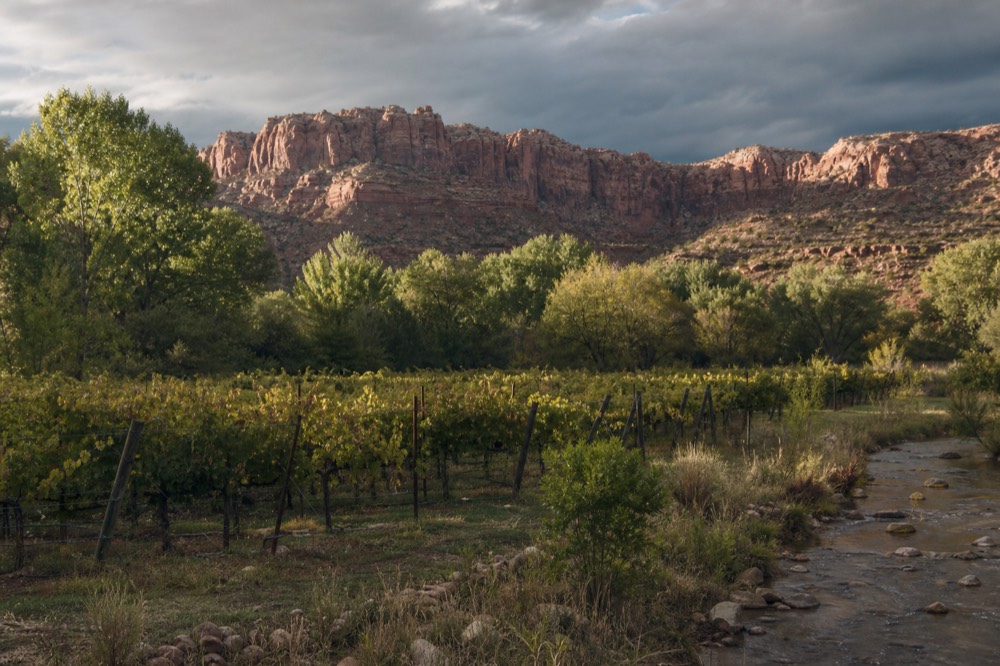
A must-do, and the one most first-timers leave off. The wine does not grow in Sedona. It grows 20 to 40 minutes southwest in the Verde Valley AVA, federally established in November 2021 across roughly 200 square miles, with 24 vineyards, 11 wineries and 25 tasting rooms. Getting down there is a different landscape, not a detour.
Here is the case in one sentence: the Verde Valley is the only part of a Sedona trip where you are somewhere other visitors mostly are not. The creek-bottom road past Page Springs and Cornville looks nothing like Uptown. It is green. There are cottonwoods and irrigation ditches and horses.
The practical obstacle is the drive back, and it is the reason guided runs exist. Uptown to the Page Springs cluster is 25 to 35 minutes, Old Town Cottonwood about 30, Alcantara near Camp Verde about 35, and Jerome around 45 on a road with switchbacks. Guests always underestimate the climb back up 89A after a tasting afternoon.
Two formats do the job. The limo-style bus covers four wineries with a charcuterie picnic in the middle, from $109 per person across six to seven hours, holding a 4.6 from 800 travellers. The all-inclusive alternative folds every tasting fee and a made-to-order lunch into one price at $199 per person, with five to six pours at each stop, which is the version to take if you dislike opening your wallet at every counter. You can compare what the all-inclusive price actually covers before choosing. Every shared vineyard run compared side by side sits on the homepage.
What should you skip in Sedona?
The four-vortex marathon, the shopping-only afternoon in Uptown if you are short on days, and any plan that puts a viewpoint at noon. Also skip driving yourself to wineries if anyone in the car intends to taste properly, because the return leg climbs 89A with switchbacks and no shoulder.
The other honest skip: the twenty-five-item list itself. Sedona rewards depth, not coverage. An hour standing at one overlook while the light changes beats three overlooks photographed in flat midday sun, and no algorithm-built itinerary will tell you that because coverage is easier to sell.
One more thing people over-plan: they treat Jerome as essential. It is a genuinely strange and good hill town with real tasting rooms, but at 45 minutes each way on a switchback road, it turns a wine day into a driving day. Fold it in only if you have three days or more, which is covered in how long a Sedona trip really needs.
The fifth item on the list is the one nobody puts there, and it is the reason it belongs. Montezuma Castle and Tuzigoot both sit within a few minutes of the wine route, which means they cost you almost no driving if you attach them to the Verde Valley day rather than treating them as a separate excursion. A cliff dwelling set into a limestone face and a hilltop pueblo overlooking the river give the trip a second dimension, and both are quiet at the hours when the Sedona viewpoints are not. If you have already decided the wine day is happening, adding one of them is close to free.
Can you fit all five into one trip?
Comfortably in three days, tightly in two. Day one takes the Chapel and a golden-hour viewpoint. Day two goes to the Verde Valley for the tasting day, with Montezuma Castle or Tuzigoot bolted on since both sit near the route. Day three opens with a vortex site at eight and keeps the afternoon free.
The ordering matters more than the arithmetic. Put the wine day in the middle so nobody is driving on arrival day or departure day. Put the vortex morning on a weekday if your dates allow, because that is where the parking problem is worst. And if someone in the group wants the rocks without any walking at all, the classic two-hour Red Rock West off-road jeep run slots into day one's afternoon as its own booking; check price and times here.
Season shifts everything too. Harvest changes what the tasting rooms are doing, and summer changes what hour you can stand outside, which is laid out in the month-by-month tasting calendar. If your group is six or fewer and wants the day built around its own pace rather than a fixed route, the door-to-door private tour options start at $469 for the whole vehicle, which stops being extravagant once you divide it. And for the days when nobody wants a trail at all, the non-hiking version of Sedona has the full priced list.