What Should I Expect at a Winery?
A first-timer's walkthrough of a Verde Valley tasting room: how a flight works, reservations, the spit bucket, tipping, and what a guided tour changes.
 By Patricia Collins, Sedona wine tour specialist & Verde Valley experience guide
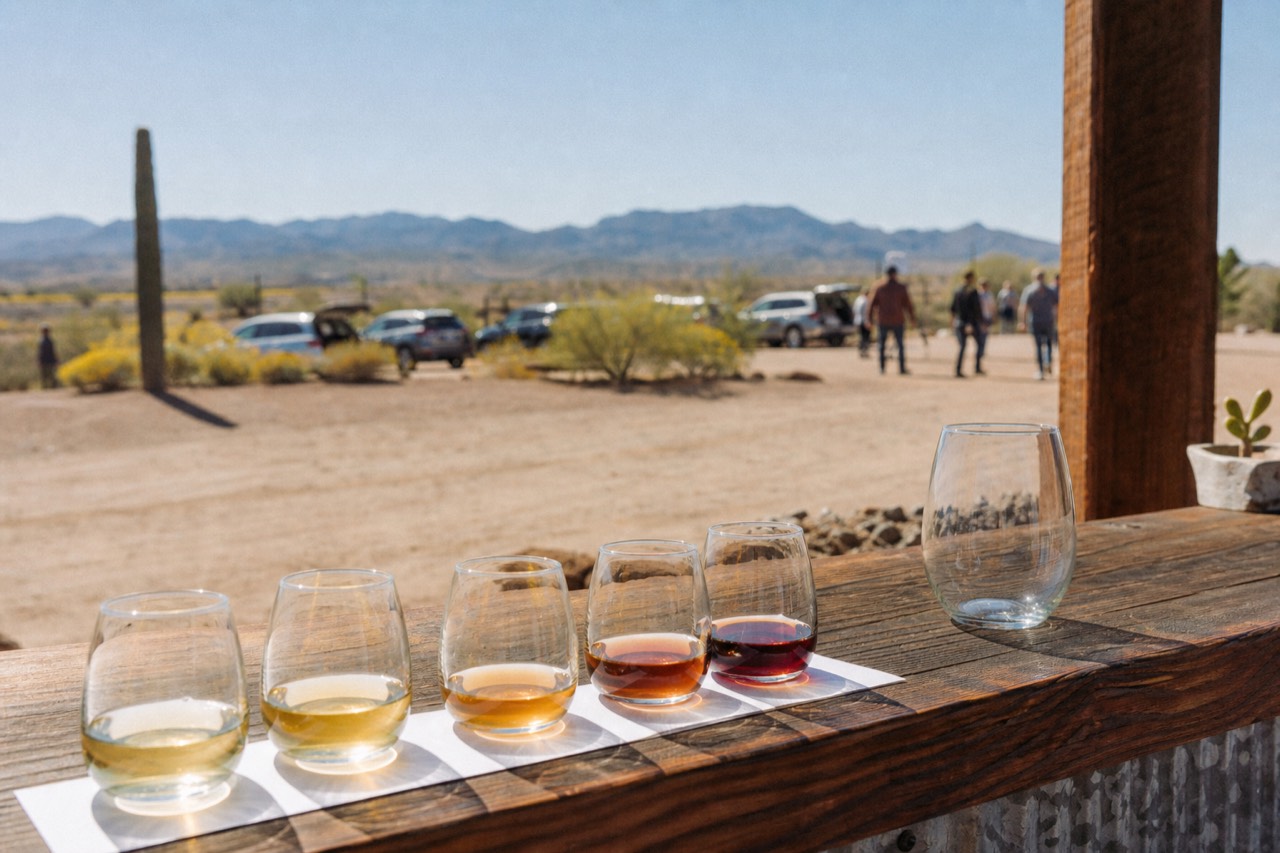
The first tasting room I ever walked a nervous guest into, she stood two feet back from the bar with her hands in her jacket pockets and waited to be told what to do. Nobody told her anything. The pourer slid a list across, poured about an ounce and a half of Malvasia Bianca, and went to answer a question at the other end of the bar. That is the whole intimidating secret: a tasting room is a bar with a shorter menu and a slower pace, and most of the anxiety people bring to it is about a ceremony that does not exist.
What does exist is a set of small mechanics that nobody explains out loud. This is those mechanics, specifically as they run in the Verde Valley, where the rooms are casual, the patios matter more than the bars, and the drive back up 89A is a real part of your planning.
What actually happens when you walk in?
You walk to the bar or the host stand, give your name if you booked, and get handed a tasting list with four to six wines on it and a price at the top. You choose the flight or a single glass, you pay at the start or the end depending on the room, and you find a seat. That is the entire entry process.
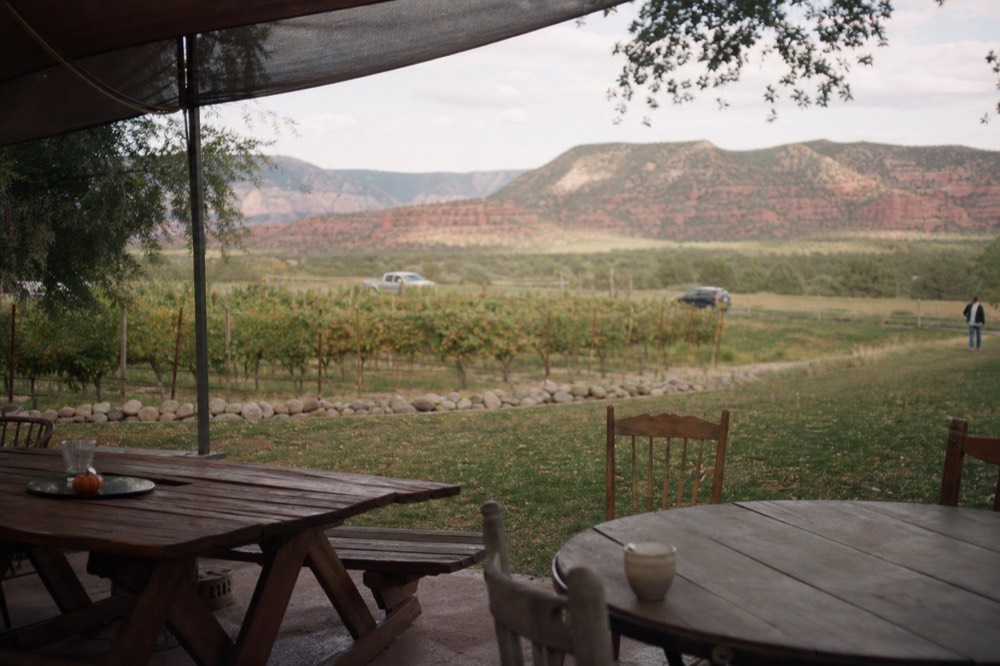
Verde Valley rooms lean informal. Page Springs Cellars, Javelina Leap and Oak Creek Vineyards are all working properties rather than showrooms, and on a good afternoon the best seat is outside on a terrace with the creek or the vines in front of you. Nobody dresses up. I have seen people arrive straight off Bell Rock in hiking boots covered in red dust and be perfectly at home.
The one thing to sort out on arrival is whether you are standing at a bar or being seated. Some rooms run a bar service where you migrate down the counter, others sit you at a table and bring the flight out on a paddle. Ask which one you are in and the rest follows naturally.
How does a tasting flight actually work?
A flight is a set sequence of small pours, usually four to six wines, roughly an ounce to an ounce and a half each, moving from lighter to heavier: whites first, then rosé, then reds, with anything sweet or fortified at the end. You are not expected to finish any of them. The pourer sets the order for a reason, so let them run it.
Between pours there is water and often a bowl of plain crackers. Both are there for the same job, which is resetting your palate so the fourth wine is not just a memory of the third. Use them. People skip the water and then wonder why everything after the halfway point tastes like the same red.
Ask what you are drinking. Verde Valley plantings lean Rhône and Italian, so a lot of what lands in front of you will be Syrah, Sangiovese, Barbera or Malvasia Bianca rather than the Napa lineup people expect. That is genuinely the interesting part of tasting here, and the pourers will happily talk about it. There are more than forty grape varieties in the ground across the valley, which is a strange amount of variety for 125 planted acres.
Pour size matters if you are doing more than one stop. The all-inclusive shared day pours five to six wines at each of its two wineries, which is a real amount of wine by the second stop, and it is one of the reasons that particular tour includes a made-to-order lunch rather than a snack.
Do you need a reservation, or can you walk in?
Increasingly, yes. Most Verde Valley wineries now recommend or outright require reservations, particularly on weekends and for any group, though some rooms still take walk-ins and Page Springs Cellars is one of them. Policies are set individually and change with the season, so the winery's own page is the only current answer.
The pattern I see is simple. A Tuesday in February, walk in anywhere. A Saturday in October during harvest, do not gamble, especially with four or more people. Groups are where rooms draw the line hardest, because six people at a bar is most of a bar.
The Verde Valley Wine Trail keeps the current room list and links out to each winery, and Page Springs Cellars publishes its own hours and events, including a locals' night on Thursdays and harvest tours in season. Check both before you build a route around a specific room.
If your group is small and your afternoon is short, the three-hour express run hits two vineyards with a charcuterie board and no planning on your part, and you can check whether its departure fits your day instead of phoning rooms one at a time. Worth knowing it is a very new listing with almost no review history behind it.
What does a tasting cost, and when is it already paid for?
Tasting fees vary room by room and are set by each winery, not by the region. Some rooms waive the fee when you buy a bottle. On guided tours the fee is sometimes folded into the ticket and sometimes not, which is the single most common billing surprise, so read what the listing itemises before you book.
This is the part worth being precise about, because "wine tour" covers two different products. One kind hands you a seat and a driver and you pay each room yourself. The other has already paid every room on your behalf. The price difference between a $109 seat and a $199 seat is usually exactly that.
| Tour style | Tasting fees | Food | Stops | From price | Length |
|---|---|---|---|---|---|
| All-inclusive shared | All fees included, 5-6 pours per winery | Made-to-order lunch included | Page Springs Cellars, Javelina Leap | $199 pp | 6h |
| Four-vineyard shared | Itemised on the listing | Picnic lunch | 4 vineyards, rum distillery, cheese shop | $109 pp | 5-6.5h |
| Limo-style bus | Itemised on the listing | Charcuterie picnic | Up to 4 wineries | $109 pp | 6-7h |
| Small-group luxury | Itemised on the listing | Sit-down lunch | 4 boutique wineries | $125 pp | 6h |
| Three-hour express | Itemised on the listing | Charcuterie board | 2 vineyards | $79 pp | 3h |
| Private luxury SUV | Itemised on the listing | Not stated | Up to 4 wineries, up to 6 guests | $469 per group | 5h |
If you would rather not do arithmetic at four wineries with three glasses of Syrah in you, the all-inclusive version removes the question entirely, and you can see exactly what its price covers on the listing. Across the whole set, from-prices run $79 per person to $472 per group, and the full comparison sits in the shared vineyard lineup.
How long does one winery take, and how many fit in a day?
Budget forty-five to sixty minutes per room for a flight, a look around and a bathroom stop, plus the drive. Uptown Sedona to the Page Springs cluster is 25 to 35 minutes, Old Town Cottonwood about 30, Clarkdale about 40. That arithmetic is why three stops is a comfortable day and five is a forced march.
Look at what the operators themselves schedule and the pattern is clear. A three-hour tour covers two vineyards. A six to seven hour day covers four. One private option books a full hour at each of its three wineries and nothing else, which tells you what an unhurried stop actually costs in time.
| Tour | Stops | Total length | What that leaves per stop |
|---|---|---|---|
| Three-hour express | 2 vineyards | 3h | Under an hour each once you subtract the drive |
| Vortex morning to vineyards | 2 wineries plus an overlook | 3-4h | Short, deliberate stops |
| Newer door-to-door pickup | Small group, Verde Valley | 4h | Stop count set by the operator, no review history yet |
| Four-vineyard shared | 4 vineyards, distillery, cheese shop | 5-6.5h | Roughly 45 minutes each, tightly run |
| Limo-style bus | Up to 4 wineries | 6-7h | Around an hour each with a picnic break |
| Private, three wineries | Page Springs Cellars, D.A. Ranch, Oak Creek Vineyards | flexible | A stated full hour at each |
Guests always underestimate the drive back up 89A at the end. It is not long, but it is the last hour of a day that started with a mimosa, and it is uphill into afternoon light. More on the geography in how far the wineries really are.
Is it rude to spit, dump a pour, or leave without buying?
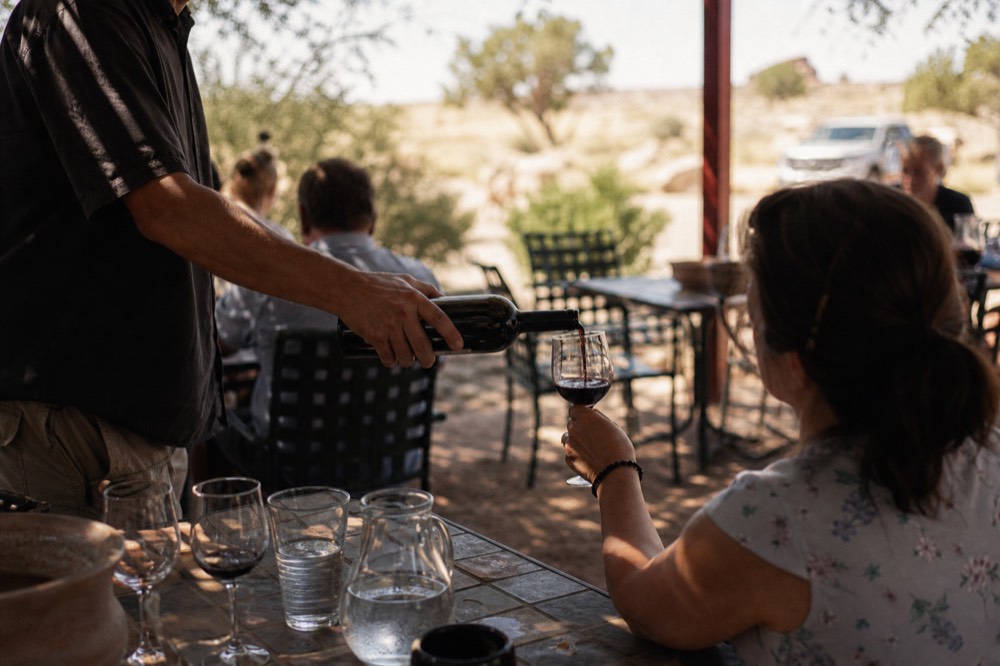
No to all three. The spit bucket on the bar is standard equipment at every tasting, not a judgment on the wine, and dumping what you did not finish is what it is there for. Buying a bottle is welcome and never required. Tipping the pourer is normal in Arizona tasting rooms, and a few dollars per person or the usual percentage on a bottle purchase is well within range.
The spit bucket is the thing first-timers refuse to touch, and it is the single habit that separates a pleasant four-winery day from a rough one. Nobody at the bar is watching. Winemakers spit constantly. If you are on stop three of four and want to taste everything, spit or dump most of it and drink the one you actually like.
On buying, the honest position is that tasting rooms make their living on bottles, not on fees, and a small Verde Valley producer notices a sale in a way a supermarket does not. But a room that pressures you is a bad room. If you like something, buy it there, because most of these labels are not distributed far and the shipping question is its own puzzle. That is covered in what is worth carrying home.
One rule that does not bend anywhere in the valley: every tasting is 21 and over with ID. Whether under-21 passengers may ride along on a tour is each operator's own policy, printed on its own listing, and it varies.
How does a guided tour change the mechanics?
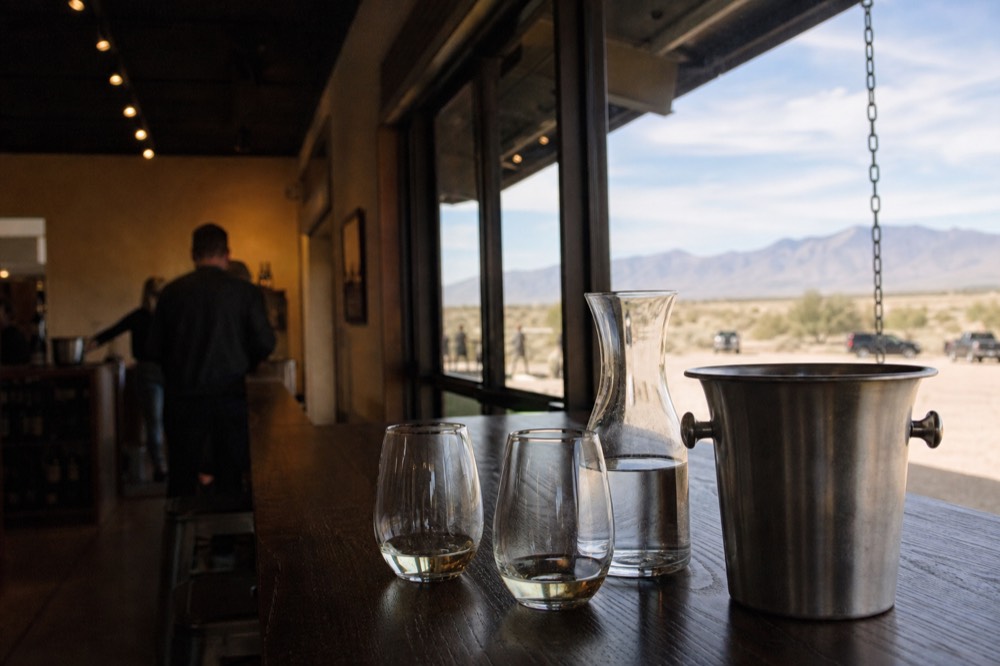
A guided tour removes the three things people get wrong on their own: the reservation calls, the fee arithmetic at each bar, and the drive between rooms after tasting. The room experience itself is identical. What changes is that your arrival is expected, your timing is someone else's job, and nobody in your group is counting their pours against the drive home.
There is one real trade. On a shared tour you move when the group moves, so the room you love gets the same forty-five minutes as the room you do not. That is the argument for a private vehicle and a custom route, where the stops are yours to choose and a group of six pays one price rather than six.
The other quiet advantage is access. A guide who works these rooms weekly gets you seated on a Saturday in October in a way a cold walk-in does not, and knows which patio is in shade at two in the afternoon. That is not glamorous knowledge. It is just the difference between a good day and a hot one.
If you want the middle path, the limo-style day covers up to four wineries with a charcuterie picnic between pours and you can check current dates and pickup points before you decide. Whichever direction you go, the full winery and tasting-room rundown is the place to work out which rooms you actually want in the day.